
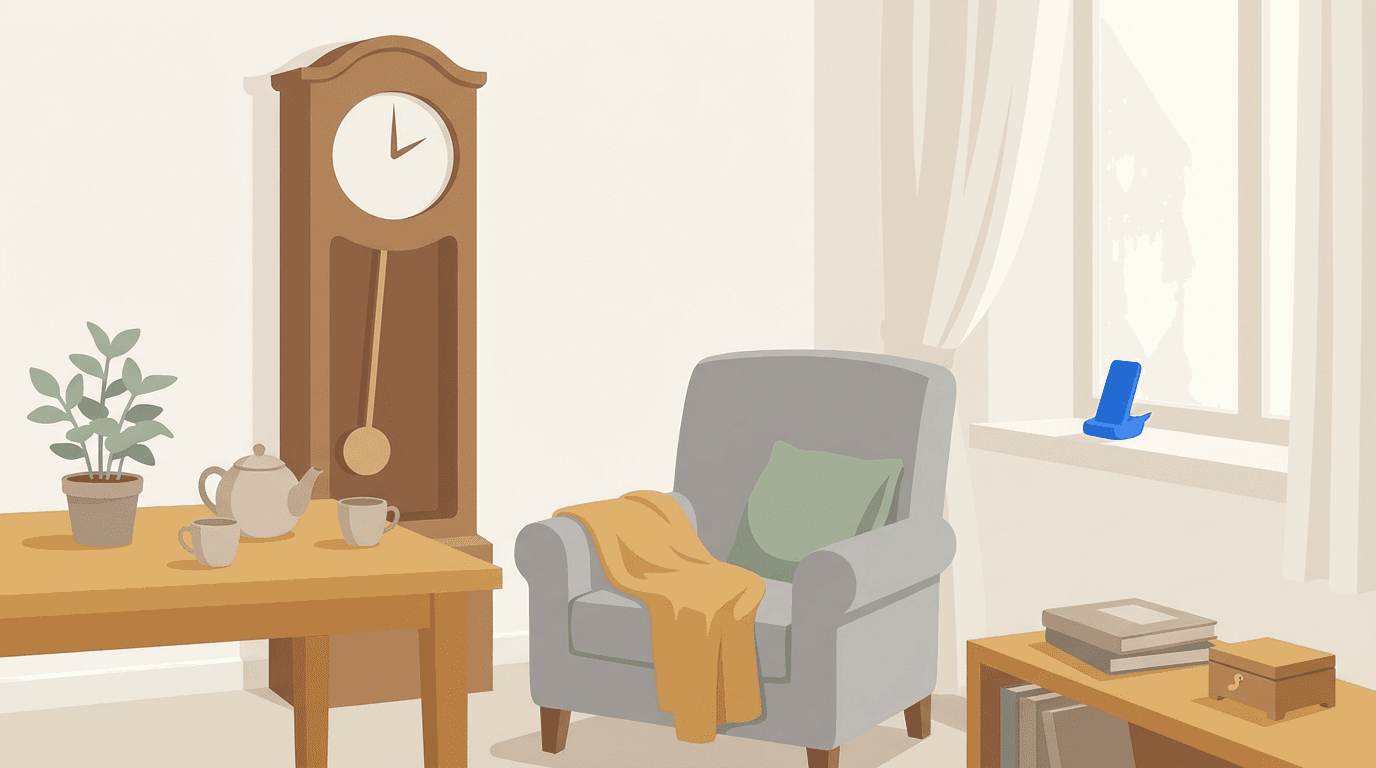
When memory starts to fail, the world becomes an unreliable place. Familiar faces blur. Sequences of events dissolve. Time loses its shape. For someone living with dementia or significant memory loss, every day can feel like navigating an unfamiliar room in the dark. That is exactly why routine becomes so powerful — and why the families and caregivers who protect it often see a real difference in their loved one's wellbeing.
What Routine Does That Memory Cannot
Memory allows us to orient ourselves: to know what day it is, what comes next, and who the people around us are. When that capacity erodes, the brain searches for other anchors. Routine provides them.
Repeated patterns of experience get encoded differently than conscious declarative memory. Someone with Alzheimer's disease may not remember having breakfast, but if breakfast always happens at the same time in the same chair with the same small rituals, the body and brain recognize the pattern. That recognition creates calm. It signals: this is safe, this is known, I belong here.
This is not a workaround or a trick. It reflects something fundamental about how the brain processes familiarity. Routine becomes a prosthetic for lost memory.
How Disruption Triggers Distress
The flip side of routine's power is that disruptions hit harder than most families expect. A change in caregiver, a hospital stay, a holiday visit that shifts sleeping and eating schedules — all of these can produce pronounced confusion, agitation, or withdrawal in someone with dementia.
From the outside, this can look like a sudden decline. In many cases, it is actually a predictable response to the removal of the cues that were keeping the person oriented. Once the routine restores, the person often stabilizes again.
This matters for practical planning. When a disruption is unavoidable — a medical appointment, a family gathering, a move — caregivers can reduce its impact by keeping as many other elements of the routine intact as possible, reintroducing the normal schedule quickly afterward, and preparing the person gently in advance.
What a Good Daily Routine Actually Looks Like
There is no single correct routine for every person. The best one reflects the individual's history, preferences, and current abilities. That said, strong routines for people with memory loss share a few common features:
- Consistent timing. Wake, meals, activities, and sleep happen at the same time each day. The clock becomes a reliable cue.
- Familiar sequences. Morning hygiene, breakfast, a walk, a rest — each activity follows the last in a predictable order.
- Meaningful activity. Tasks that match the person's retained abilities — folding laundry, tending a plant, listening to music from their era — provide engagement without frustration.
- Regular social contact. A familiar voice at a set time each day can serve as a genuine anchor. This doesn't require an in-person visit. A phone call that arrives at the same time every morning or evening builds the same kind of expectation and comfort.
- Calm transitions. Moving between activities slowly, with verbal cues and consistent language, reduces the friction that triggers anxiety.
The Caregiver's Stake in Routine
Routine isn't only protective for the person with memory loss. It reduces the cognitive and emotional load on the caregiver too.
When the day has a reliable structure, caregivers spend less mental energy making moment-to-moment decisions. They can anticipate needs, prepare for transitions, and build in their own rest. The predictability that calms a person with dementia also gives the people caring for them a framework they can depend on.
This matters because caregiver burnout is real, and it has direct consequences for the quality of care. Protecting routine is, in part, a form of protecting the caregiver.
When Routine Includes Regular Check-Ins
One of the most consistent findings in dementia care is that social connection slows cognitive and emotional decline. Regular, warm interaction — hearing a familiar voice, being asked how you're doing, having someone listen — keeps people engaged with the world around them.
For families managing distance or demanding schedules, building daily contact into a loved one's routine can feel difficult to sustain. AI-powered check-in services like VIPCall make it possible to provide consistent, caring daily phone calls without requiring a family member to be available at exactly the same time every day. That regularity matters. A call that arrives every morning at 9 a.m. becomes part of the routine. It becomes an anchor.
Routine Is an Act of Care
Building and protecting a daily routine for someone with memory loss takes thought and commitment. It requires the people around them to coordinate, to communicate, and sometimes to set aside the spontaneity that feels natural in other relationships. But the return on that investment is significant: less anxiety, fewer behavioral crises, more moments of genuine recognition and connection.
Routine is not a limitation imposed on someone with dementia. It is a form of care that meets them where their brain is — and makes the world feel safe again.
If you are supporting a loved one with memory loss and looking for consistent, caring daily contact that fits into their routine, see how VIPCall works for the people who matter most.