
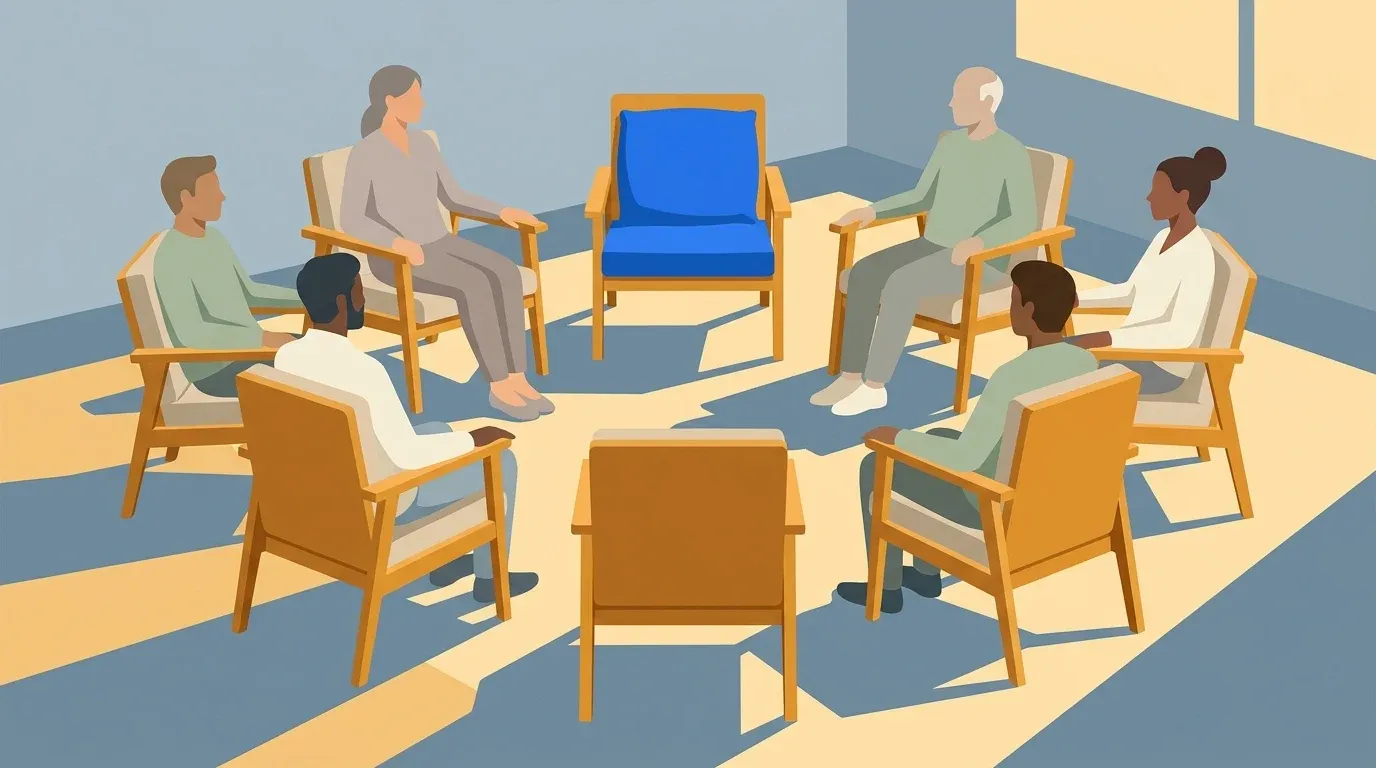
A caregiver support group is a regular meeting, in person or online, where people caring for aging or ill family members share what they're carrying and hear how others handle similar pressures. Most groups meet weekly or monthly, run 60 to 90 minutes, and are led by a facilitator, social worker, or fellow caregiver rather than a therapist. For working caregivers and sibling care teams stretched thin, the value isn't just emotional relief. It's picking up specific strategies from people a few steps ahead in the same situation.
What Happens at a Caregiver Support Group?
A typical session opens with a brief check-in where each person shares how their week went, followed by open discussion of a specific challenge, and closes with practical resources or a topic for next time. There's no obligation to speak, no cost at most community-based groups, and no requirement to have a diagnosis in the family. The format stays consistent because predictability itself is part of the appeal for caregivers whose daily lives are anything but.
The demand for this kind of structured support reflects how widespread caregiving has become. The 2025 AARP and National Alliance for Caregiving study estimates 63 million family caregivers in the United States, about one in four adults, and found that seven in ten caregivers are employed while juggling care responsibilities. That combination of a day job and a caregiving role is exactly why so many working caregivers end up searching for a group in the first place. They're not looking for sympathy. They're looking for people who understand what it's like to leave a meeting at 4:45 to make a doctor's appointment.
What Is Caregiver Burnout?
Caregiver burnout is a state of physical, emotional, and mental exhaustion that builds up from sustained caregiving demands, and it's the single most common reason people walk into their first support group meeting. It shows as resentment, numbness, or a sense that nothing you do is enough, and it develops gradually rather than overnight. Recognizing it early, before it becomes a crisis, makes recovery considerably easier.
The scale of the strain behind burnout is well documented. The AARP 2025 survey found a 45% increase in the number of U.S. caregivers over the past decade, reaching 63 million, with 29% of caregivers in the sandwich generation, managing care for an aging parent while raising their own children. A third has been caregiving for five years or longer. The Centers for Disease Control and Prevention treats family caregiving as a public health issue, tracking frequent mental distress among caregivers 45 and older and noting that sleeping fewer than seven hours a night can directly interfere with a caregiver's ability to provide safe, attentive care. A support group can't add hours to your day, but it can help you spot the pattern before it turns into a health issue of your own.
What Are the Signs of Extreme Caregiver Fatigue?
Extreme caregiver fatigue tends to show up as exhaustion that sleep doesn't touch, short temper with the person you're caring for, pulling away from friends, and a flattened sense that you're just moving through the day. Physical symptoms often follow: frequent headaches, getting sick more than usual, or noticeable weight change. These are signals worth naming out loud, and a support group is often the first place caregivers hear someone else describe the exact same thing.
The financial and health toll behind these symptoms is significant. The same 2025 AARP and NAC caregiving report found that a meaningful share of caregivers report poor health, a quarter has taken on debt because of caregiving costs, and half report a negative financial impact overall. A substantial portion of caregivers provide high-intensity care, the kind that leaves little room for anything else. If several of these signs sound familiar, it's worth a conversation with your own doctor, not just your relative's.
What Are the Treatment Options for Caregiver Stress Syndrome?
Treatment for caregiver stress syndrome usually combines respite care, counseling, peer support groups, and practical changes to how caregiving responsibilities get shared. A primary care doctor is a reasonable starting point, since they can screen for related health issues and refer you to specialists if needed. No single approach fixes it on its own, which is part of why groups so often recommend combining a few strategies rather than picking just one.
Coordination is one of the most overlooked treatment options, and it's where sibling care teams tend to struggle most. The Administration for Community Living's National Strategy to Support Family Caregivers calls for expanded respite, caregiver training, and self-directed options, and notes that real support requires coordination across health care, long-term services, employers, and community programs. In practice, that coordination often breaks down inside families before it ever reaches a formal system. If you haven't mapped out who covers what and when, a caregiving plan built for working adult children is a useful place to start before burnout forces the issue.
Can You Recover From Caregiver Burnout, and When Should You Walk Away?
Recovery from caregiver burnout is possible, but it generally requires changing the caregiving situation itself, not just resting for a weekend. That might mean reducing direct care hours, bringing in paid help, or setting firmer boundaries with siblings about who does what. Deciding to step back from a caregiving role entirely, rather than adjusting it, is a bigger decision, and it's worth making with a social worker or geriatric care manager rather than alone, since it affects both your wellbeing and your relative's safety.
One practical step many caregivers skip until they're already burned out is scheduling real breaks in advance. Arranging respite before a caregiving crisis gives you and your siblings breathing room without waiting for an emergency to force the conversation. And if you're not sure whether what you're feeling counts as burnout or just a hard week, these three signs of caregiver stress are worth reviewing honestly.
Where Daily Coordination Fits Alongside a Support Group
A support group addresses the emotional and social isolation of caregiving, but it doesn't solve the daily coordination problem that often causes the isolation in the first place. When siblings aren't sure who talked to Mom last, or nobody has a clear record of how she's really doing between visits, the caregiving load quietly concentrates on whoever is paying closest attention. That imbalance is a common thread in support group conversations, and it's a solvable one.
This is where a tool like VIPCall fits into the picture. VIPCall makes a daily phone call, no app required for your relative, and turns that ordinary check-in into a shared update the whole family or care team can see. Instead of one sibling fielding every question and carrying the mental load of remembering what changed, everyone has the same between-visit context. It doesn't replace medical care, a support group, or professional advice, but it does remove one of the quiet daily burdens that pushes caregivers toward burnout in the first place: being the only one who knows what's going on.
What to Do Next
If you're feeling the early signs of caregiver fatigue, look for a local or online support group this week, not after things get worse. If the harder problem is coordination among siblings or family members, start there directly. And if you want a simple way to keep everyone informed without adding another task to your plate, see how VIPCall works for the people who matter most.
Caregiving support groups matter, and so does making sure the daily reality of caregiving gets shared fairly instead of falling on one person by default. Both are part of the same solution.