
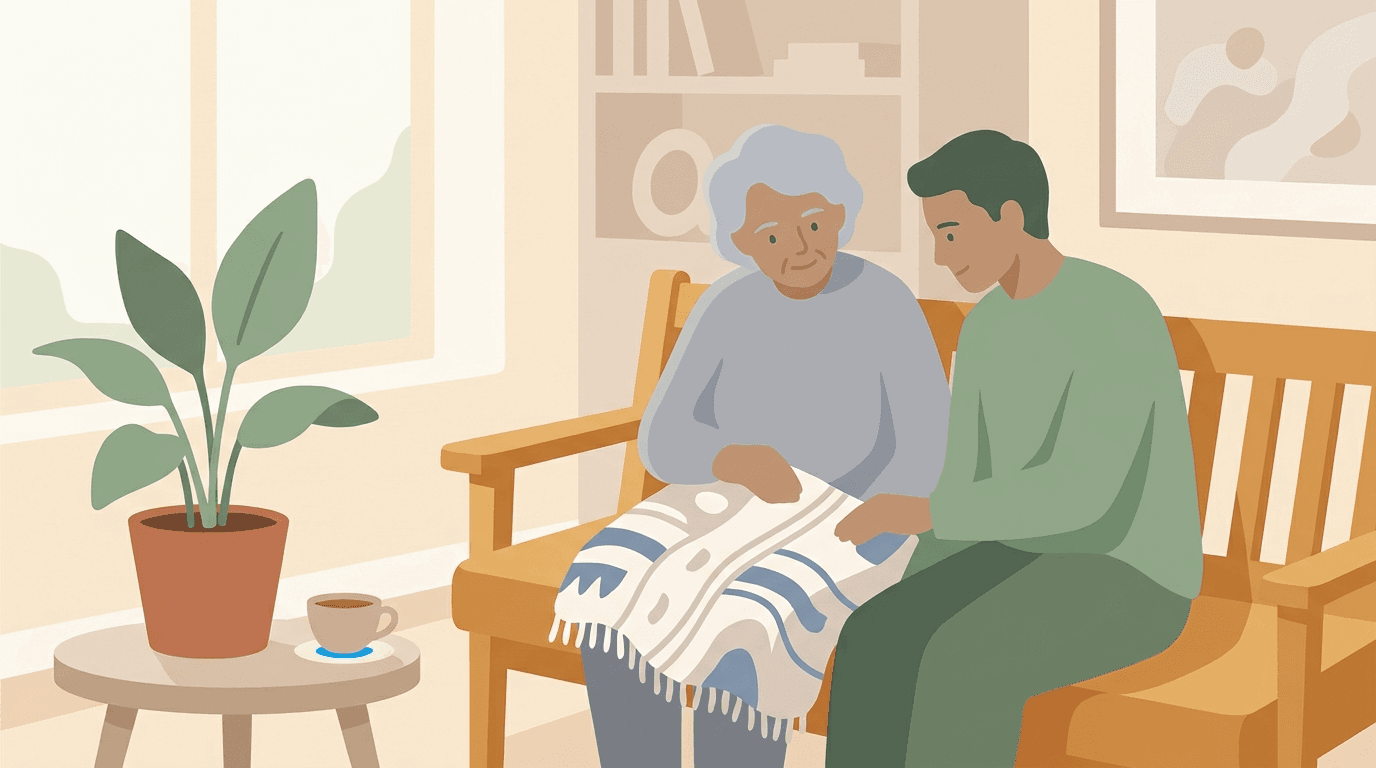
Memory loss doesn't erase a person's need for connection. If anything, it intensifies it. For seniors experiencing cognitive decline, every interaction carries extra weight. A familiar voice, a predictable routine, a conversation that feels safe rather than confusing can be the difference between a grounded day and a frightening one. That's why the question of familiarity matters so much when families start thinking about AI check-in calls for their aging loved ones.
Why Familiarity Is a Care Tool, Not Just a Comfort
For people living with Alzheimer's disease, vascular dementia, or other forms of cognitive decline, the brain's ability to process new information weakens before its ability to retrieve older, emotionally anchored memories. This is why a person who can't remember what they had for breakfast may still light up at the sound of a childhood song or respond warmly to a name they've known for decades.
Familiarity in communication works the same way. When a senior hears a consistent voice at a consistent time, asking consistent kinds of questions, their nervous system registers safety. The brain doesn't have to work as hard to orient itself. Anxiety drops. Engagement goes up. This isn't a theory; it's the foundation of most person-centered memory care practice.
How Routine Check-In Calls Support Orientation
One of the earliest and most disorienting effects of memory decline is losing track of time. Many seniors with cognitive challenges struggle to know what day it is, whether it's morning or evening, or how long it's been since they last spoke to someone they love. A daily phone check-in, arriving at the same time each day, acts as a gentle clock.
The call itself doesn't need to be long. What matters is that it happens reliably. Over days and weeks, a senior begins to anticipate it. They start to associate that particular voice and that particular rhythm with feeling connected. For family members who can't call every single day without disrupting their own work or caregiving responsibilities, an AI system that maintains that daily rhythm fills a real gap without replacing the human relationship.
Personalizing AI Check-Ins for Deeper Familiarity
The most effective AI check-in calls for seniors with memory challenges aren't generic. They use the person's name. They reference relationships that matter: a daughter in Portland, a son who calls on Sundays, a grandchild who just started school. They ask about things the person genuinely cares about, whether that's the garden, a sports team, a weekly television program, or a pet.
This kind of personalization doesn't require anything elaborate. It requires the family to invest a little time upfront sharing what they know about their loved one. When that information shapes the conversation, the AI check-in stops feeling like a wellness survey and starts feeling like a visit from someone who knows them.
Families using VIPCall can provide exactly this kind of context, so the calls their loved ones receive reflect real relationships and real life rather than a scripted script that could apply to anyone.
What Families Actually Learn From Daily Check-Ins
Beyond the direct benefit to the senior, consistent daily calls give families something invaluable: a regular signal. When a parent who normally chats easily becomes monosyllabic, or when someone who is always oriented about the day suddenly seems confused about the season, those shifts show up in the pattern of calls over time.
This isn't clinical monitoring in a cold sense. It's the kind of attentiveness that close family members naturally maintain when they talk to someone regularly. An AI system that makes daily contact possible extends that attentiveness to families who live far away, work demanding hours, or simply can't sustain the emotional weight of making every check-in call themselves.
The Emotional Stakes for Seniors Living Alone
Isolation accelerates cognitive decline. The research on this is consistent and sobering. Seniors who go long stretches without meaningful social contact show faster deterioration in memory and executive function than those who maintain regular interaction. For families who worry about a parent living alone between visits or professional care appointments, daily AI check-ins aren't a replacement for human presence. They're a bridge that keeps the relationship active and the person engaged.
For the senior, hearing a familiar structure, a warm tone, and their own name spoken with care is a reminder that they are known and that someone is paying attention. That reminder has real power on the days when memory makes everything else feel uncertain.
Making It Work for Your Family
Starting with AI check-ins doesn't require a complicated setup or a commitment to an entirely new care plan. It starts with one question: who in your life would benefit from hearing a familiar, caring voice every single day? For many families, the answer arrives quickly.
See how VIPCall works for the people who matter most at https://vipcall.ai/ and find out how easy it is to bring consistent, personalized daily connection to a senior you love.