
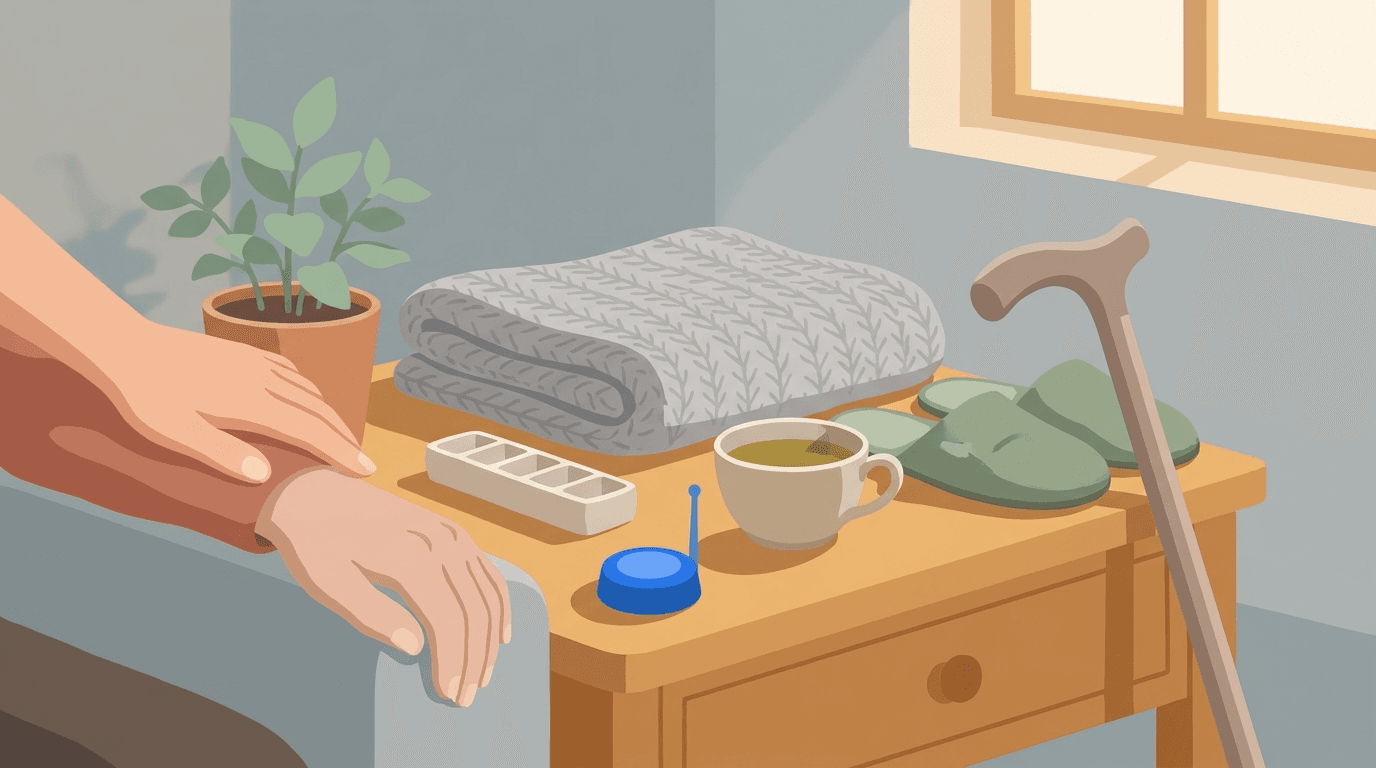
The discharge papers get signed, the nurse wheels your parent to the curb, and everyone exhales. The hard part is over. Except it often isn't. For older adults, the weeks after leaving the hospital are frequently more dangerous than the stay itself. The monitoring stops, the routines shift, and problems that would be caught immediately in a clinical setting can quietly compound at home for days before anyone notices.
Why the First 30 Days Are So Critical
Hospital readmission rates tell a clear story. Nearly one in five Medicare patients returns to the hospital within 30 days of discharge. Many of those readmissions trace back to things that happened, or didn't happen, at home. A missed dose of a blood thinner. A glass of water skipped too many times. A near-fall that became a real one on day six.
Hospitals are built to stabilize. They are not built to manage the slow, unglamorous work of recovery in a real home environment. That gap between discharge and stability is where seniors are most exposed.
The Silent Risks That Families Often Miss
Medication confusion is one of the most common and most dangerous post-discharge problems. Seniors may leave the hospital with new prescriptions that interact with existing ones, dosing schedules that are genuinely complicated, or instructions written in language that doesn't translate clearly at home. Studies consistently show that medication errors spike in the first week after discharge.
Dehydration and poor nutrition follow close behind. Hospitals manage fluid and food intake carefully. At home, a senior who doesn't feel hungry, or who finds it hard to get to the kitchen, can fall behind quickly. Dehydration in older adults can cause confusion, dizziness, and falls, and it progresses faster than most families expect.
Infection is another risk that gets underestimated. Wounds, catheters, and IV sites that were monitored closely in the hospital now depend on the senior or a caregiver to spot the early signs. Redness, warmth, and low-grade fever are easy to dismiss as normal soreness, especially when the senior minimizes symptoms to avoid worrying family members.
The Emotional Side of Coming Home
Physical risks get most of the attention, but the emotional aftermath of a hospitalization is just as real. Many seniors come home feeling frightened, disoriented, and far less confident in their own bodies than they did before. That loss of confidence increases fall risk in a measurable way. A person who second-guesses every step is more likely to rush, overcompensate, or avoid movement altogether.
Isolation also tends to increase after a hospital stay. Friends may stay away to avoid disturbing recovery. Routines get disrupted. The senior who used to walk to a neighbor's house or attend a weekly activity suddenly doesn't feel up to it. Weeks of social withdrawal can follow, and loneliness has real physiological consequences, including slower healing and depressed immune response.
What Families Can Actually Do
The instinct is to swoop in and take over. That instinct isn't always wrong, but it isn't always sustainable either. Families live across cities and time zones. Work schedules don't pause because a parent had surgery. The challenge is building a system of awareness that doesn't depend entirely on proximity.
A few things make a concrete difference in the transition period:
Daily contact matters more than occasional visits. Hearing a voice, answering a few questions about how the day went, noticing when energy seems lower than usual, these small moments of connection create a running picture of how recovery is actually progressing. You can't get that from a weekly Sunday call.
Ask specific questions. "How are you feeling?" invites vague reassurance. "What did you eat for lunch?" or "Did you take your evening medications?" invites real information. Seniors often underreport problems to avoid being a burden, so gentle, specific questions work better than open-ended check-ins.
Coordinate across the family. When multiple siblings are involved, it's easy for everyone to assume someone else checked in. Designating clear days and roles prevents the gaps where things fall through.
When Phone Check-Ins Become a Safety Net
For families who can't be physically present every day, consistent phone check-ins are one of the most practical tools available. Not a vague "call when you can" arrangement, but a reliable daily touchpoint at a time the senior expects and looks forward to. That rhythm builds trust and creates an early warning system. If something sounds off, you find out that day, not after a crisis has already unfolded.
VIPCall.ai provides AI-powered daily phone check-ins designed for exactly this kind of situation. The calls are warm and conversational, they arrive consistently, and the people who matter to you stay informed about how things are going.
If someone you love is coming home from the hospital soon, or already navigating a difficult recovery, see how VIPCall works for the people who matter most.