
The weekly family call about Mom or Dad starts with the best intentions and usually ends with someone feeling like they missed something. One sibling heard about the fall near the stairs. Another did not. Someone thinks the confusion at dinner Tuesday was a one-off. Someone else is quietly worried it was not. The meeting closes without resolution because nobody actually knows what the week looked like in detail. That gap is not a failure of effort. It is a structural problem with how families try to monitor an older parent's wellbeing.
The Core Problem with Weekly Check-Ins
Weekly family meetings compress seven days of a person's life into a 20-minute conversation driven by whatever feels most memorable or urgent in the moment. That means gradual changes get missed. A parent who slept poorly three nights in a row, skipped two meals, and mentioned feeling lonely twice in one week may not raise any flags on a Friday recap because nothing acute happened. But those patterns matter. They often precede a health event, a mood decline, or a care need that could have been addressed earlier.
Adult siblings also bring different pieces of information to the table. The sibling who lives closest holds the most detail. The one farthest away asks questions that sound behind-the-times to everyone else. The one who calls most often filters what they pass along, sometimes to avoid alarming people, sometimes just from exhaustion. By the time the family aligns on what is actually happening, reality has already moved on.
What Daily Insights Change
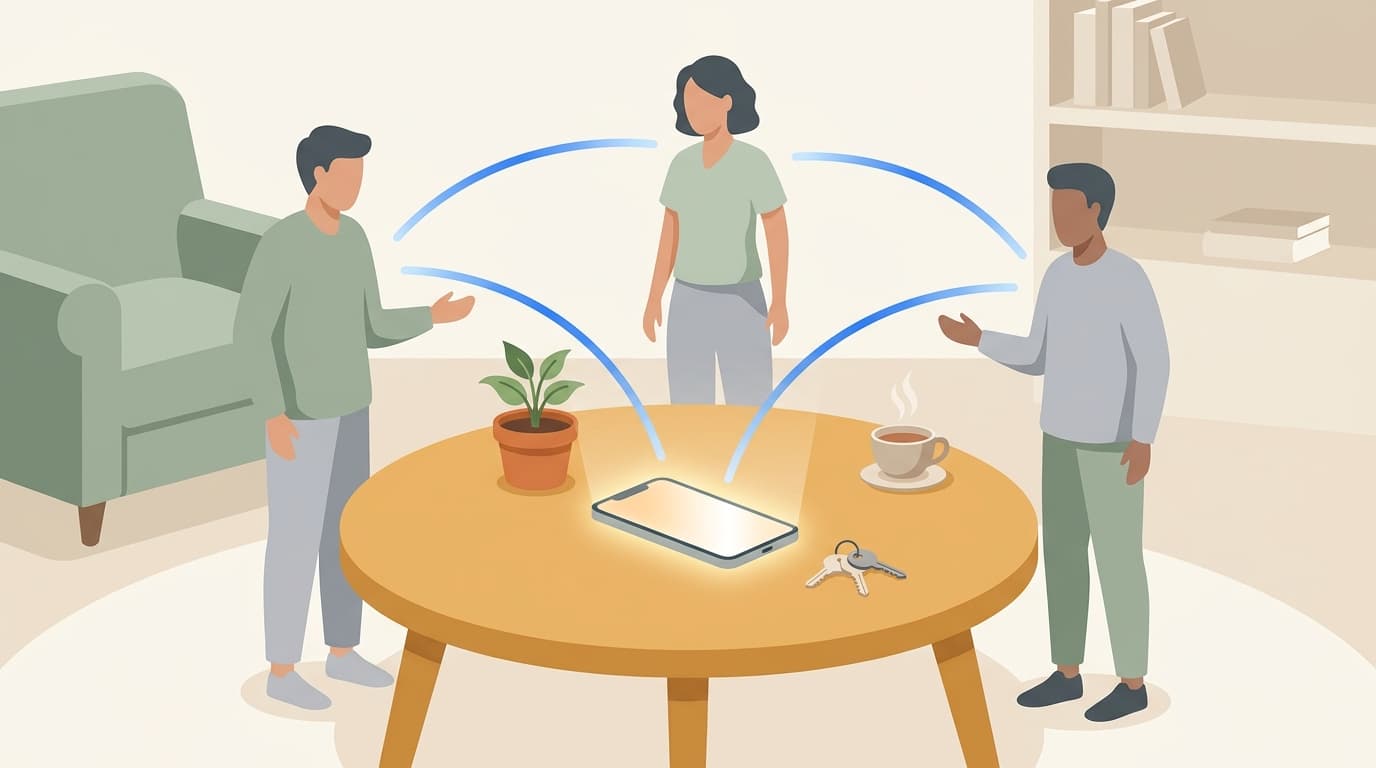
When a consistent daily check-in happens, the family's information base stops being a patchwork of impressions and becomes a running record. Each day, a brief AI-powered phone call with the older adult generates a simple signal: how they felt, whether they ate, if anything seemed off. That signal goes to the family as a shared summary.
The effect is significant. Siblings stop relying on one person to relay everything. They see the same information at the same time, which levels the playing field and reduces the tension that builds when one sibling feels more in-the-loop than another. More practically, daily insights make it possible to spot a three-day trend rather than a single bad day.
How This Replaces the Catch-Up Function of Family Meetings
Most of what happens in a family elder-care meeting is catch-up. What happened this week? How did they seem? Did the doctor visit go okay? When families already share a daily summary, that question is answered before the meeting begins. The conversation can skip straight to what to do about what everyone already knows.
This is the actual replacement: not the meeting itself, but the reason the meeting exists. Families still benefit from talking to each other. What changes is the quality and focus of that conversation. It moves from reconstruction to decision-making.
Why Phone Calls Work Better Than Apps for This
The older adult's experience matters here. Solutions that require a parent or grandparent to download an app, learn a new interface, or remember to log in daily introduce friction that erodes consistency. Consistency is the entire value. A check-in that happens every day is worth far more than one that happens whenever the technology cooperates.
A phone call is something nearly every older adult already knows how to answer. No new device. No password. No screen to navigate. That simplicity is what makes daily data collection realistic rather than aspirational.
Warning Signs That a Family Needs More Than Weekly Meetings
If any of these apply, the gap between weekly check-ins is already costing the family signal they need:
- An older parent lives alone and no one speaks with them daily.
- Siblings disagree about how their parent is actually doing.
- A recent health event, fall, or hospitalization has raised the stakes.
- One sibling carries the entire coordination burden and is burning out.
- The family has a sense something is changing but cannot point to specific evidence.
None of these problems get solved by adding another family meeting. They get solved by improving the quality and frequency of the underlying information.
When Daily Insights Are Not Enough
Daily check-ins are not a substitute for in-person care, medical evaluation, or emergency response. If a parent needs hands-on help, a check-in call does not provide it. What it does provide is the consistent signal that helps a family recognize when in-person care or a medical conversation has become necessary. Think of it as the early warning layer, not the full care system.
If a check-in flags something concerning, someone still needs to act. The value is that someone now has a specific, documented reason to make that call today rather than waiting until Friday.
---
Families do not need better meetings. They need better information between the meetings. Daily check-in insights give adult siblings a shared, consistent picture of how an aging parent is doing, day by day, without requiring the older adult to learn anything new or the family to coordinate a time that works across three time zones. See how VIPCall works for the people who matter most.