
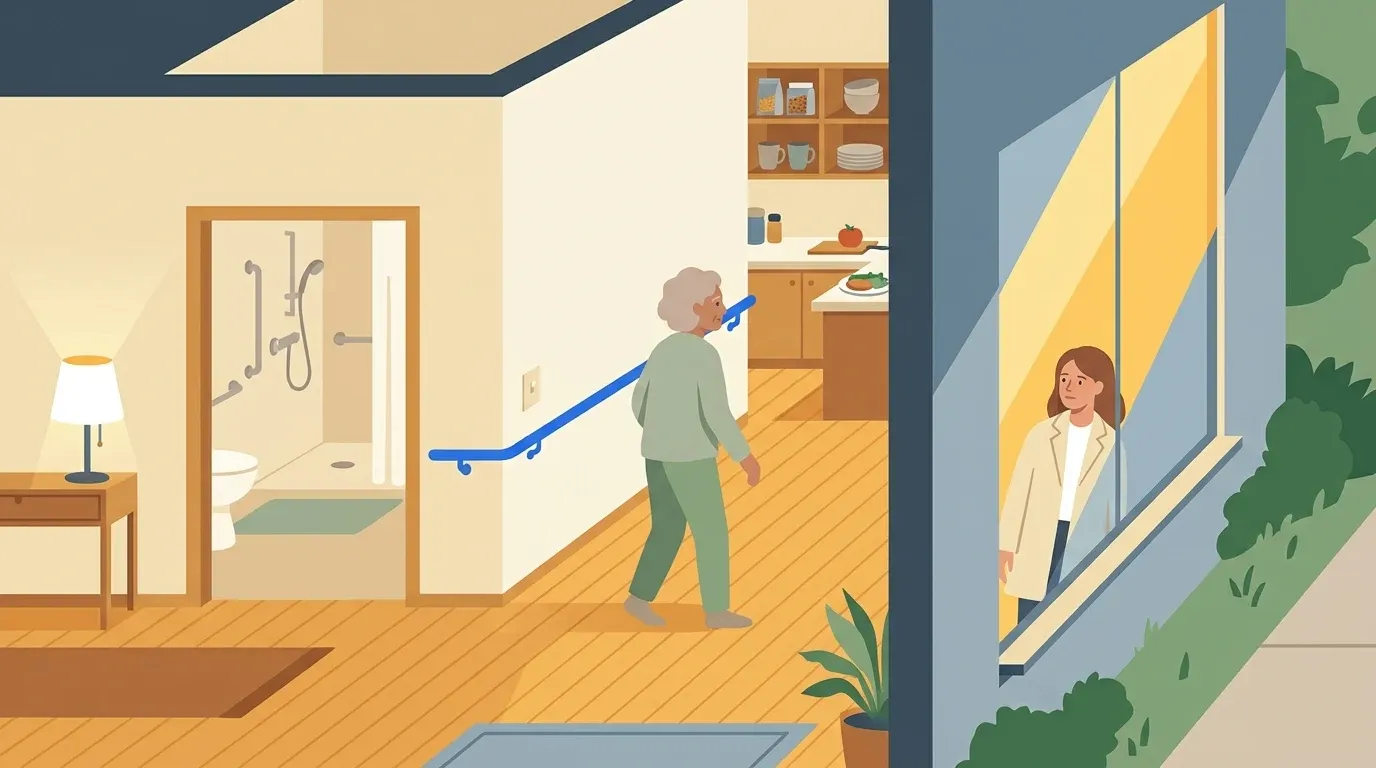
For most healthy, mentally sharp 70-year-olds, living alone is safe as long as they can manage daily tasks, reach help quickly in an emergency, and stay meaningfully connected to other people. The real risk isn't the number 70 itself. It's what happens when health changes, support networks thin out, or isolation sets in quietly and nobody notices until something goes wrong.
Is It Safe for a 70 Year Old to Live Alone?
The honest answer is that it depends on the person, not the birthday. A 70-year-old who drives safely, cooks, manages medications, and talks to friends or family most days is in a very different position than one who has stopped driving, skips meals, or has gone quiet since a spouse died. Age is a starting point for the conversation, not the deciding factor.
What actually predicts safety is a combination of physical health, cognitive sharpness, home environment, and social connection. The National Institute on Aging recommends that families plan ahead for personal care, meals, transportation, health care, and emergency support before those needs become urgent, rather than waiting for a fall or hospitalization to force the conversation. That planning is what turns "living alone" from a gamble into a workable arrangement.
The Risks Families Actually Need to Watch
Two separate risks tend to get lumped together, and it helps to pull them apart. The first is physical: falls, missed medications, an unnoticed medical event. The CDC reports that more than one in four older adults falls each year, and a fall that happens alone, with no one checking in that day, can go undiscovered for hours. This is the risk most families think about first, and it's the one that drives interest in emergency buttons and medical alert systems.
The second risk is quieter and just as serious: isolation itself. The CDC's research on social isolation and loneliness finds that older adults and people living alone face elevated risk, and that isolation and loneliness are linked to heart disease, stroke, type 2 diabetes, depression, anxiety, dementia, and earlier death. Roughly one in three U.S. adults reports loneliness and about one in four reports lacking social and emotional support, according to the same CDC data. This isn't a minor quality-of-life issue. It's a health risk that compounds the physical ones, because isolated older adults are also less likely to have someone notice when something is wrong.
The numbers get sharper at the federal level. The U.S. Surgeon General's report on social connection found that social isolation raises premature mortality risk by 29%, with poor social relationships linked to 29% higher heart-disease risk and 32% higher stroke risk. Among older adults specifically, chronic loneliness and isolation can raise dementia risk by about 50%. Put together, the CDC and Surgeon General findings mean that a 70-year-old living alone without regular contact is managing two risks at once: the physical risk of an unwitnessed emergency, and the slower health toll of disconnection.
Signs the Current Setup Isn't Working Anymore
Most families don't get a clear signal that it's time to change something. Instead, they get a slow accumulation of small things: mail piling up, the same excuse for skipping a family dinner, a car with a new dent nobody mentions, weight loss that's easy to attribute to "just getting older." Individually, none of these prove anything. Together, they're worth taking seriously.
Watch specifically for withdrawal from calls or visits that used to be welcome, a flat mood that doesn't lift, changes in hygiene or home upkeep, missed medications or doctor appointments, and repeated forgetfulness that goes beyond normal absent-mindedness. The CDC notes that supportive relationships are associated with longer life, less stress, better physical and emotional health, and higher quality of life for older adults, which cuts both ways: the presence of steady connection is protective, and its absence is a real risk factor worth acting on, not just a sad side effect of aging. If you're trying to tell the difference between someone who's simply quieter with age and someone who's genuinely struggling, depression and loneliness can look similar but need different responses.
Building a Plan That Actually Holds
A workable plan for living alone rarely comes down to one solution. The NIA's guidance is to combine family involvement, paid caregivers, and community services rather than expecting any single piece to cover everything. In practice, that usually means addressing five areas: personal care, meals, transportation, health care access, and what happens in an emergency.
Medical alert systems and fall-detection buttons address the emergency piece well, but only the emergency piece. They're reactive by design, sitting silent until something has already gone wrong. What they don't do is catch the slow decline, the skipped meal, or the growing loneliness that often precedes a crisis. That's where a routine daily touchpoint matters. A short daily phone call is not a monitoring device and it doesn't replace medical alert systems, but it does two things those systems can't: it gives the older adult regular human connection, and it gives family a consistent, current picture of how they're actually doing, not just a snapshot from last weekend's visit.
This is where VIPCall fits into the decision. VIPCall makes a warm daily phone call, no app required on the older adult's end, and turns that conversation into a summary for the family: mood, notable changes, anything that needs follow-up. For adult children juggling their own households and jobs, that means less guessing between visits and fewer "how's Mom doing?" text threads with no good answer. It's not a replacement for a home care aide or an emergency button. It's the connective layer that makes those other pieces more effective, because someone is actually checking in every day instead of hoping no news is good news. If you're not sure what to say on those calls, these conversation starters for an elderly parent can help the calls feel less like a checklist and more like a real conversation.
When Living Alone Isn't Enough Anymore
Some signs mean it's time to escalate beyond daily check-ins, whether that's more in-home help, a move closer to family, or assisted living. These include a fall or near-fall, confusion about medications or finances, getting lost in familiar places, a home that's become unsafe or unsanitary, or a caregiver who is clearly burning out trying to manage everything remotely. None of these are things a phone call alone can fix, and they call for a licensed professional, not general advice from a blog post.
If you notice a sudden change in confusion, mobility, or a possible fall, contact the person's doctor or, in an emergency, call 911. For ongoing concerns about memory, medication management, or the right level of care, a geriatric care manager, the person's primary care physician, or an elder law attorney for financial and legal questions can give guidance specific to the situation. Daily check-ins, whether from family or a service like VIPCall, are meant to surface these moments earlier and give families better information, not to diagnose or replace professional care.
The question "is it safe for a 70 year old to live alone" doesn't have a single yes-or-no answer, and it shouldn't be decided once and forgotten. It's worth revisiting every few months, especially after any health change, because what's safe today may need adjusting in a year. Building in a reliable daily check-in now, before there's a crisis, is one of the most practical steps a family can take. See how VIPCall works for the people who matter most and start building that daily connection today.