
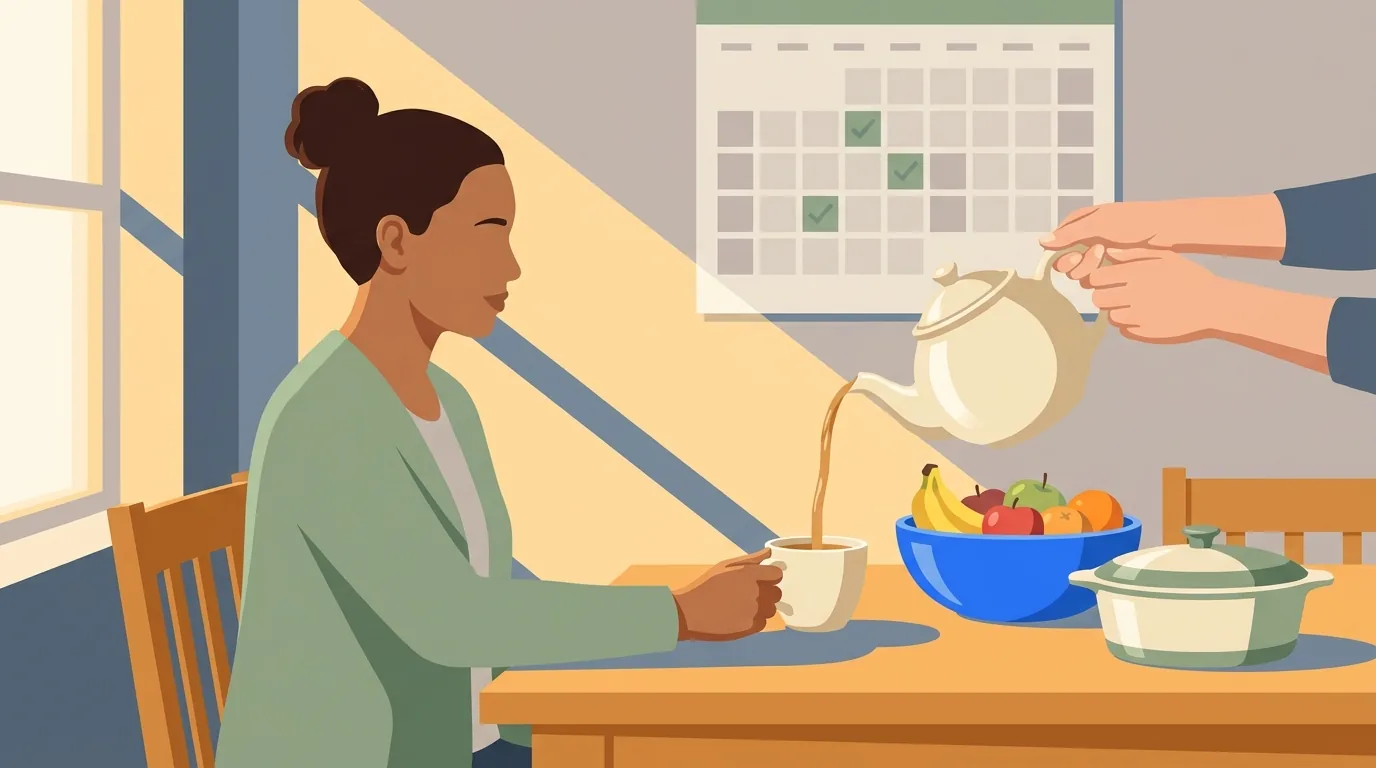
National Family Caregivers Month is each November, and the best support is specific. Take over a defined task, give the caregiver real time off, and help them keep their own health appointments. Open offers such as "let me know if you need anything" are easy to wave off, while "I will pick up prescriptions every Tuesday" is easy to accept.
Caregiver Action Network leads National Family Caregivers Month and says it recognizes more than 63 million family caregivers in the United States. November has carried that recognition since 1997, and the 2026 theme is "Care Connects Us" (Caregiver Action Network). A month of awareness is nice. This list is about what to do on a Tuesday.
1. Replace "let me know" with a specific offer
Caregivers are busy and often reluctant to ask. The National Institute on Aging (NIA) notes that many caregivers later say they did too much alone, and that accepting help is hard because they worry about being a burden (NIA, Taking Care of Yourself). Make the yes easy: "I can take Thursday evenings through December. Does that work?"
2. Take one recurring task and keep it
Ask the caregiver for their task list, then claim one line from it. Pharmacy runs, the weekly grocery order, and driving to a standing appointment are good choices. One task kept for six months is worth more than five tasks offered once. NIA suggests that caregivers keep a list of what needs doing and let the other person choose, so bring your own pick (NIA).
3. Give real time off
Respite means a caregiver gets a break while the person they care for is looked after. The National Family Caregiver Support Program funds respite care along with information, counseling, support groups, and training through state programs (Administration for Community Living). Our guides to arranging respite before a crisis and finding respite care near you show where to begin. If you are family, your own afternoon can be the respite.
4. Help them keep their own health appointments
NIA says caregivers are less likely than others to get preventive health services, such as annual checkups, and tend to have a higher risk of physical and mental health problems (NIA). Offer to cover for them on the day, or to drive. Then ask whether the visit happened.
5. Learn the signs of caregiver stress
NIA lists signs that include feeling exhausted, overwhelmed, or anxious, becoming easily angered, feeling lonely, trouble sleeping, losing interest in activities, and skipping personal care. If you see them, say what you noticed without judging. Our post on three signs of caregiver stress and the guide to recovering from caregiver burnout can help you start that conversation.
6. Hold one family meeting and write down the result
NIA says caring for an older person often takes teamwork, and recommends getting the older person and everyone involved together, ideally when there is no emergency, to work out what care is needed, who the primary caregiver is, and who does which task (NIA, Sharing Caregiving Responsibilities). Our family meeting guide gives an agenda.
7. Stay involved from a distance
People who live far away can still play an important role in coordinating care, according to NIA. Research services, handle insurance paperwork, or take the phone calls the caregiver dreads.
8. Listen first
You do not need to fix anything. NIA lists feeling lonely or disconnected among the signs of caregiver stress. A fifteen-minute call where you ask "how are you, not how is your mom?" is a gift. Our post on what family caregivers need most explains why.
9. Offer to sit in on the hard conversations
If the doctor's visit, the care-home tour, or the benefits phone call is stressful, volunteer to be the second set of ears. Take notes and write the next steps afterward.
10. Connect them to trusted resources
Two numbers worth keeping handy: the Caregiver Action Network Caregiver Help Desk at (855) 227-3640, and the Eldercare Locator at 1-800-677-1116, which connects families to local services (Eldercare Locator). NIA also suggests a local Area Agency on Aging, a senior center, a counselor, or a faith community as sources of support. A caregiver support group can also help.
11. Say thank you in writing
A short note naming one specific thing they did, such as "I noticed you stayed at the hospital every night last week," lands more than a general thank-you. Keep it brief and no strings attached.
12. Decide what you will still be doing in February
The month ends. The caregiving does not. Write down the one thing you will keep doing, put it on your calendar, and tell the caregiver. If you share caregiving with siblings, our post on asking siblings for caregiving help covers how to raise it.
If you are the caregiver: how to ask
Reading this as the person who needs the help? NIA offers practical ways to ask when it feels hard (NIA, Taking Care of Yourself):
- Ask for small things first. Many large jobs break into simpler tasks.
- Send a text or email if asking face to face is uncomfortable.
- Keep a list of what needs doing and let the other person choose, based on their skills and interests.
- Practice one sentence: "Thanks for asking. Here's what you can do."
- Be honest about what you need and what you do not. Not every offer will be helpful, and some people will say no. Try not to take it personally.
NIA also suggests telling your own doctor that you are a caregiver, since they can advise on your physical and mental health and may know about support groups and respite care in your community.
What if the caregiver says no?
Some caregivers decline help at first, out of pride, habit, or worry about being a burden. Do not push, and do not disappear. Offer again in a different form: a smaller task, a different day, or a text instead of a call. NIA notes that many people want to help and that contributing makes them feel good, so a clear, specific offer is often easier to accept the second time.
If a caregiver is struggling and keeps refusing help, encourage them to talk to their own doctor, a counselor, or the local Area Agency on Aging, which NIA lists as sources of support. The Eldercare Locator can connect them by phone at 1-800-677-1116.
How VIPCall can help the caregiver and the family
VIPCall does not replace a caregiver or provide hands-on care. It can lift one routine job: keeping up with how a parent is doing.
- Daily phone call. VIPCall calls the parent on any phone, with no app, and texts the family a short summary after each call, so the caregiver is not the only one who hears.
- To-dos. Turn the offers above into to-dos and assign each to a family member, so "I can take Thursdays" appears on a shared list.
- Appointments. Put the caregiver's own appointments and the parent's visits on one shared schedule.
VIPCall supports family communication and follow-through. It does not assess medical safety, provide hands-on care, or respond to emergencies. See how VIPCall works and compare family plans and pricing.
Sources and further reading
- Caregiver Action Network, National Family Caregivers Month
- Administration for Community Living, National Family Caregiver Support Program
- National Institute on Aging, Taking Care of Yourself: Tips for Caregivers
- National Institute on Aging, Sharing Caregiving Responsibilities
- National Institute on Aging, Caregiving
- Administration for Community Living, Eldercare Locator