
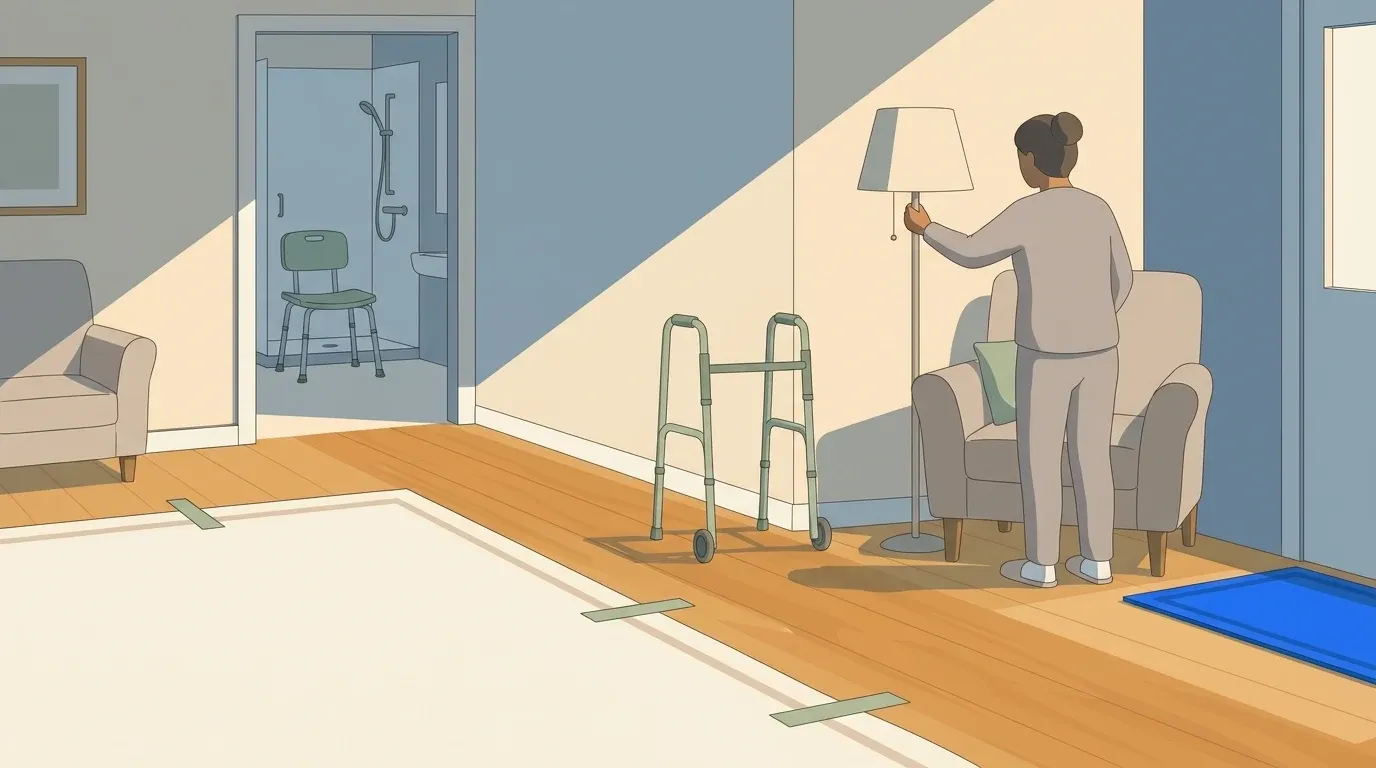
When your elderly parent is coming home from the hospital, the days right after discharge carry real risk, and a short checklist covering medications, follow-up care, warning signs, and daily support can prevent the kind of setback that leads straight back to the emergency room. Hospitals move fast at discharge, often handing families a stack of paperwork and a few rushed instructions. What happens in the next 72 hours at home matters just as much as what happened in the hospital bed, and most of it falls on adult children or sibling teams who are figuring this out for the first time.
What should be in the discharge plan before you leave the hospital
Before your parent leaves the hospital, you should have a plan covering life at home, medications, warning signs, test results, and follow-up appointments. The Agency for Healthcare Research and Quality identifies these five topics as the core of a safe discharge, and every one of them should be addressed in writing before your parent walks out the door.
Don't leave the hospital until someone has explained, in plain language, what daily life will look like this week. Will your parent need help getting to the bathroom? Can they climb stairs? Is a walker required, and does someone actually own one? AHRQ recommends treating the patient and family as full partners in this conversation and using teach-back, where you repeat instructions back in your own words, to confirm you actually understood them. If a nurse or discharge planner rushes through this, ask them to slow down or repeat it. You are allowed to take notes, ask questions twice, and request a printed copy of everything discussed.
Elderly parent coming home from the hospital: what changes in the first week
An elderly parent coming home from the hospital often looks and acts different than before admission, even after a routine stay, and families should expect some combination of physical weakness, medication changes, and short-term confusion in the first week. This is normal to a point, but it needs active monitoring rather than assumption.
The first few days set the tone. Fatigue is common, appetite may be lower than usual, and your parent may need more help than they did before the hospital stay, even for tasks they managed independently a week earlier. This is where a lot of families get caught off guard, expecting a return to baseline that takes longer than anyone planned for. Building in daily contact, even a short phone call, helps you catch a slow decline before it becomes a crisis. VIPCall exists for exactly this stretch of time: a daily phone check-in that doesn't require your parent to learn an app, paired with a summary sent to the family so everyone knows how the week is actually going, not just how it looked during a single weekend visit.
Reconcile every medication before and after discharge
Medication changes are one of the most dangerous parts of a hospital discharge. Prescriptions get added, stopped, or adjusted in dosage, and old bottles at home can easily get mixed up with new ones. Nationally, CMS reported that 74.0% of Medicare Advantage enrollees had their medicines reconciled within 30 days of inpatient discharge, which means roughly one in four did not get that reconciliation in the reported window. That gap is exactly where dangerous mistakes happen, from double-dosing to missing a critical new prescription entirely.
Before leaving the hospital, ask for a single updated medication list that replaces every prior list. Sit down with your parent, or do it over the phone if you're at a distance, and physically compare that list against every bottle in the house. Throw out or set aside anything that's been discontinued, and confirm the new pharmacy pickup or delivery is scheduled. If your family is splitting caregiving duties between siblings, decide now who confirms the medication list weekly, because assuming "someone else checked" is how errors slip through. A related resource on this exact problem is available in this article on medication confusion after hospital discharge.
Watch for warning signs of delirium and complications
Confusion after a hospital stay is not always harmless. The National Institute on Aging reports that delirium complications in older adults can include emergency visits and readmission within 30 days of discharge, making it one of the more serious risks families should watch for at home. NIA also notes that the Hospital Elder Life Program, developed by Dr. Sharon Inouye, has been shown to reduce delirium incidence by 40% in hospitalized older adults, which underscores how much early attention to sleep, hydration, and orientation can matter.
At home, watch for sudden confusion, unusual drowsiness, agitation, or a parent who seems "not quite themselves" even if they can't explain why. This is different from normal tiredness. If new confusion appears suddenly, especially alongside a fever, rapid heartbeat, or trouble breathing, contact their doctor immediately or go to the emergency room. Do not wait to see if it passes on its own. A short daily call can also help family members notice a change in speech patterns or memory that might otherwise go unnoticed for days between in-person visits.
Understand what Medicare will and won't pay for
If your parent needs rehab after discharge, it matters whether it happens in a skilled nursing facility or at home, and Medicare's rules are specific. Original Medicare generally requires a medically necessary inpatient hospital stay of at least three consecutive days before it will cover skilled nursing facility care, and Part A limits that coverage to 100 days per benefit period. In 2026, days 1 through 20 cost $0 per day after the applicable deductible, days 21 through 100 cost $217 per day, and your parent pays all costs after day 100. These numbers change the calculus for a lot of families deciding between facility rehab and home-based recovery, so confirm current details directly with Medicare or the hospital's discharge planner rather than relying on what worked for a friend's parent last year. For a deeper walkthrough of these rules, see does Medicare cover rehab after a hospital stay, and for a broader look at what recovery timelines typically look like, see elderly recovery time after a hospital stay.
When a check-in system is not enough
A daily phone check-in, whether it's a family member calling or a service like VIPCall, is built for routine connection and early pattern-spotting. It is not a substitute for medical care, emergency response, or skilled nursing supervision. If your parent has an acute medical emergency, chest pain, difficulty breathing, a fall with possible injury, or sudden severe confusion, call 911 immediately. If they need wound care, IV medications, physical therapy, or close clinical monitoring, that requires a licensed home health agency or a skilled nursing facility, not a check-in call. If legal or financial decisions come up, such as power of attorney or long-term care planning, talk to an elder law attorney or financial advisor rather than guessing based on general information. Check-in systems are good at catching the small signals between visits and appointments. They are not a stand-in for the professionals your parent's actual health situation requires.
Coordinating the sibling team without duplicating effort
Most families managing post-discharge care aren't working with a single caregiver. They're coordinating between two, three, or more siblings, often in different cities, each with partial information. One sibling was on the discharge call, another handled the pharmacy, and nobody has the full picture. This is where a lot of avoidable stress comes from, not the caregiving itself, but the constant re-explaining.
A shared daily update changes that dynamic. Instead of five separate phone calls trying to piece together how Mom's doing, everyone gets the same summary from the same daily check-in. VIPCall is built around this exact gap: a real phone call your parent can answer without downloading anything, plus a shared update for the family so siblings aren't each running their own version of the story. It doesn't replace follow-up appointments, medication management, or emergency care, but it does replace the fragmented group texts and missed signals that make the weeks after discharge harder than they need to be.
The first weeks after a hospital stay are when small problems are still small. See how VIPCall works for the people who matter most and build a daily check-in into your family's plan before you need it.