
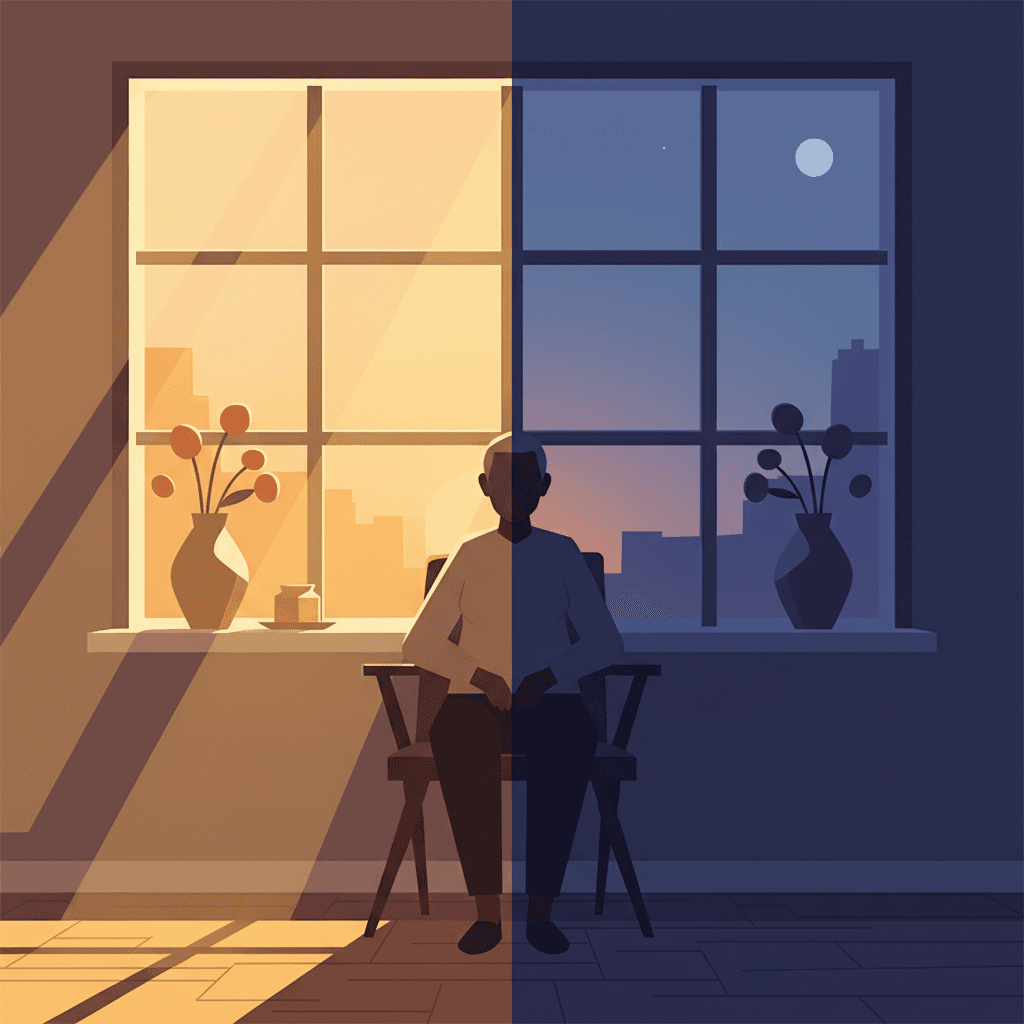
Understanding the Sundown Effect in Elderly Parents (And What to Do About It)
Your parent is fine all day. Sharp. Clear. Themselves.
Then evening hits and everything changes. They're confused. Agitated. Asking the same questions repeatedly. Sometimes paranoid or seeing things that aren't there.
By morning, they're back to normal—with no memory of last night's confusion.
This isn't random. It's the sundown effect (also called sundowning). And if you're only calling your parent during the day, you might have no idea it's happening.
Here's what you need to know: Sundowning is a real neurological phenomenon. It's often an early warning sign of cognitive decline. And timing your check-ins matters.
See how daily wellness calls can be scheduled to catch evening confusion →
What Is the Sundown Effect?
Sundowning is increased confusion, agitation, and behavioral changes that occur in the late afternoon through evening in people with dementia or cognitive decline.
The symptoms typically:
- Start between 4-6 PM
- Peak in the early evening
- Improve or disappear by morning
- Get worse as dementia progresses
- Happen almost daily once the pattern starts
What It Looks Like
Confusion:
- Disorientation about time or place
- Not recognizing familiar people
- Forgetting where they are
- Mixing up past and present
Behavioral changes:
- Restlessness and pacing
- Suspicion or paranoia
- Mood swings
- Irritability or aggression
- Anxiety or fear
Perceptual disturbances:
- Seeing things that aren't there
- Hearing voices or sounds
- Misinterpreting shadows or objects
One daughter told us: "I'd call my dad every morning and he'd be completely normal. My sister called him at night and said he was confused and paranoid. We thought she was exaggerating. Then I called him one evening and... she was right. It was like talking to a different person."
Why Evening Makes It Worse
Scientists aren't completely sure why sundowning happens, but several factors contribute:
Circadian Rhythm Disruption
The brain's internal clock regulates alertness, mood, and cognition. In people with dementia, this system is disrupted.
As natural light fades and evening approaches, the confused circadian system triggers:
- Increased fatigue
- Heightened confusion
- Difficulty processing information
- Disorientation
Mental Fatigue
After a full day of cognitive effort—remembering things, processing information, staying oriented—the brain is exhausted.
For someone with early dementia, "holding it together" all day takes enormous effort. By evening, there's no capacity left. The cognitive reserve is depleted.
Sensory Changes
As evening comes:
- Light levels drop (harder to see clearly)
- Shadows appear (can be misinterpreted as people or threats)
- Sounds change (evening sounds are different from day sounds)
- The environment feels different
For someone with cognitive impairment, these changes are disorienting and can trigger confusion or fear.
Pain and Discomfort
Chronic pain often worsens in the evening. Arthritis flares. Fatigue accumulates. Medication may be wearing off.
Physical discomfort exacerbates mental confusion.
See how VIPCall works for the people who matter most
Why You Might Not Know It's Happening
If you call your parent in the morning or early afternoon, they sound fine. Because they *are* fine—then.
By the time sundowning hits in the evening, you're not calling. You don't see it.
Your parent might not even remember the confusion by the next morning. So they don't mention it. They genuinely don't know it happened.
The Pattern Only Becomes Visible With Evening Check-Ins
One family using daily wellness calls scheduled the call for 7 PM instead of morning.
What they discovered:
- Monday evening: Confused about what day it was
- Tuesday evening: Asked same questions multiple times during call
- Wednesday evening: Agitated, suspicious about "people in the house"
- Thursday evening: Didn't recognize the call, thought it was a stranger
- Friday evening: Couldn't remember if they'd eaten dinner
Every morning when the daughter called? Her mother seemed completely normal.
The evening calls revealed a pattern that daytime contact had hidden for months.
What to Actually Do About Sundowning
You can't cure sundowning, but you can manage it and reduce its severity.
Environmental Interventions
Increase lighting as evening approaches:
- Turn on lights before it gets dark
- Use bright, full-spectrum bulbs
- Nightlights in hallways and bathroom
- Reduce shadows that can be misinterpreted
Maintain consistent routines:
- Same schedule every day
- Dinner at the same time
- Same evening activities
- Predictable bedtime routine
Reduce stimulation in evening:
- Lower TV volume or turn off
- Reduce noise
- Calm, quiet environment
- No unexpected visitors in evening
Timing Considerations
Schedule demanding activities for morning:
- Doctor appointments in morning
- Important conversations early in day
- Cognitive tasks when they're sharpest
- Social activities before 3 PM
Avoid triggers in evening:
- No caffeine after noon
- Light dinner (heavy meals worsen confusion)
- No stimulating activities after 5 PM
- No confrontations or difficult topics
Medical Management
Medication review: Some medications worsen confusion, especially in evening. Ask doctor to review timing and dosing.
Pain management: Unmanaged pain worsens sundowning. Ensure pain is controlled.
Sleep optimization: Poor nighttime sleep makes sundowning worse. Address insomnia, sleep apnea, nighttime wandering.
Vitamin D: Some studies suggest vitamin D deficiency worsens sundowning. Worth checking levels.
What Caregivers Should Do
Be present or available during high-risk hours: If sundowning is happening, evening is when they need supervision most.
Don't argue or correct: "No, that's not true" doesn't work when someone is confused. It escalates agitation.
Instead: Redirect, validate feelings, stay calm.
Track patterns: What time does it start? What triggers it? What helps? Daily documentation reveals what works.
When Sundowning Means More Support Is Needed
Mild sundowning—occasional evening confusion that resolves quickly—might not require major intervention.
Severe sundowning—consistent evening agitation, paranoia, inability to function—means living alone is becoming unsafe.
Warning signs that more support is needed:
- Sundowning happens nightly
- They're unsafe in the evening (wandering, forgetting to turn off stove)
- Confusion is severe (not recognizing home, thinking strangers are present)
- It's getting worse over time
- They can't calm down or be redirected
At that point, consider:
- Live-in caregiver
- Moving in with family
- Memory care facility (not regular assisted living—specialized dementia care)
Daily wellness calls can be timed for evening to monitor sundowning →
How Daily Check-Ins Help
If your parent is experiencing sundowning, timing the daily call for early evening (6-7 PM) reveals the pattern.
What families learn:
- How often it's happening
- How severe the confusion is
- Whether it's getting worse
- What time it typically starts
- Patterns that might trigger it
This information is critical for:
- Discussing with their doctor
- Deciding on appropriate care level
- Timing your own check-ins appropriately
- Knowing when evening supervision is needed
And for your parent: the consistent evening call can actually be grounding. Same time, same questions, same routine. In the midst of confusion, routine provides anchor points.
This Isn't "Just Aging"
Sundowning isn't normal aging. It's a sign of cognitive impairment—often dementia.
If your parent is experiencing sundowning, they need:
- Medical evaluation
- Cognitive testing
- Care planning for progression
- Safety assessment
Early intervention doesn't stop dementia, but it allows you to:
- Implement strategies that help
- Plan for future care needs
- Make legal and financial arrangements while they can still participate
- Maximize their quality of life
Ignoring sundowning because they seem fine during the day means missing critical months or years when interventions could help.
The Morning Call vs. Evening Call Decision
If your parent has no cognitive issues, morning calls work fine.
If you suspect cognitive decline or sundowning, schedule at least some check-ins for early evening to catch the pattern.
You need the full picture—not just the "good hours."