
What Are the Signs That an Elderly Person Should Not Live Alone?
Nobody wants to have this conversation.
Your parent wants to stay in their home. You want them to be safe. Those two things might not be compatible anymore.
The question isn't "Do I want my parent to stop living alone?" The question is "Are they still safe?"
And that's harder to answer than it should be. Because the signs aren't always obvious. And because your parent will fight you on this even when the evidence is clear.
Here's what you need to know: there are specific, observable indicators that living alone is no longer safe. Not "maybe they're declining." Not "I have a bad feeling." But concrete signs that the current situation has become dangerous.
See how VIPCall supports care teams and family communication
The Hard Truth About Aging in Place
Aging in place—staying in your own home as you get older—is what most people want. And for many, it's possible with the right support systems.
But there's a tipping point where living alone shifts from "independent with support" to "unsafe."
The challenge: your parent crossed that line weeks or months ago, and you're just now seeing it.
Why Parents Hide the Truth
They're not lying to you. They're protecting their independence.
Admitting they can't manage alone feels like admitting defeat. Like giving up. Like losing the last piece of control they have over their own life.
So they minimize. They explain away the falls. They don't mention the confusion. They clean up before you visit.
And you miss the signs until something forces you to see them—usually a crisis.
The Safety Red Flags You Cannot Ignore
These are not "maybe we should keep an eye on this." These are "this situation is already unsafe."
Falls and Mobility Issues
Red flag level: If they've fallen more than once, or if they're afraid of falling.
Falls are the leading cause of injury-related deaths in people over 65. One fall doubles the risk of falling again.
Signs to watch for:
- Bruises they can't fully explain
- Wearing the same clothes multiple days (too hard to get dressed)
- Not bathing regularly (afraid of slipping in shower)
- Furniture rearranged to create holding points
- New reluctance to use stairs
- Walking much more slowly or unsteadily
If your parent has fallen twice in six months, they need more support than living alone provides.
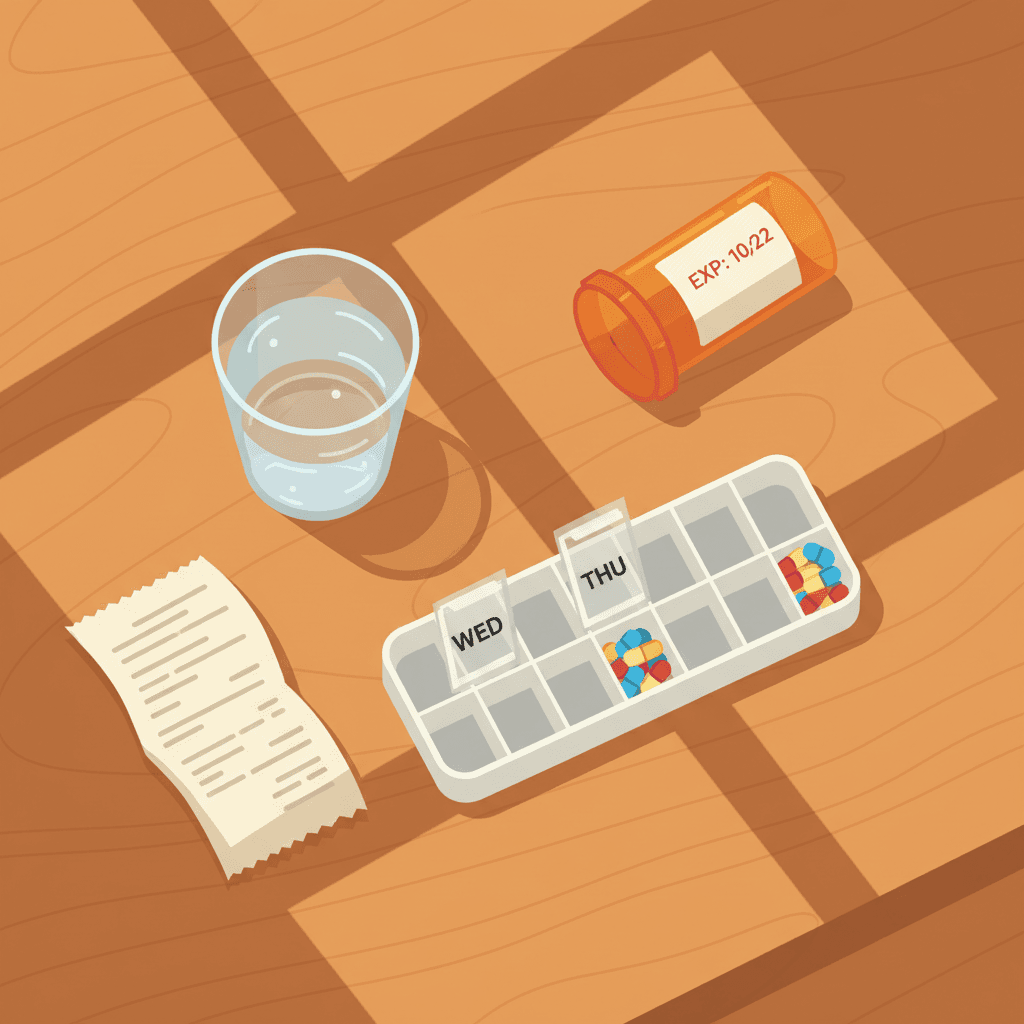
Medication Mismanagement
Red flag level: If they've ended up in the ER or hospital due to missed or incorrect medications.
Medication errors kill thousands of elderly people every year. Skipping blood pressure meds. Taking double doses because they forgot they already took them. Mixing medications incorrectly.
Signs to watch for:
- Pills scattered or disorganized
- Expired medications still in use
- "I forgot if I took my pill this morning"
- Refills not being picked up on schedule
- Confusion about what each medication is for
- Emergency room visits related to medication issues
If they can't reliably self-manage medications, they need daily oversight.
Cognitive Decline Affecting Daily Function
Red flag level: If they're getting lost in familiar places, forgetting to eat, or leaving stove burners on.
Memory lapses happen to everyone. But when cognitive decline starts affecting basic safety and self-care, living alone becomes dangerous.
Signs to watch for:
- Repeatedly calling asking the same question
- Getting confused about time or place
- Forgetting to eat (weight loss, expired food in fridge)
- Leaving appliances on (stove, iron, faucets)
- Getting lost driving familiar routes
- Not recognizing close family members temporarily
- Paranoia or unusual suspicions
If they're forgetting critical tasks like eating or turning off the stove, they cannot safely live alone.
Severe Isolation and Depression
Red flag level: If they've stopped caring for themselves or mention not wanting to live anymore.
Social isolation and depression aren't just emotional concerns—they create physical safety risks.
Signs to watch for:
- Not bathing or grooming for days
- Wearing the same clothes repeatedly
- House becoming unsanitary (dishes, trash, clutter)
- Stopped eating properly (not because of memory, but apathy)
- Talking about being a burden or wanting to die
- Giving away possessions
- Withdrawing from all social contact
If depression has reached the level where they're not caring for basic needs, they need immediate intervention.
Home Environment Becoming Unsafe
Red flag level: If the home itself has become hazardous and they can't or won't fix it.
Sometimes the issue isn't the person—it's the living situation.
Signs to watch for:
- Hoarding behavior (paths blocked, rooms inaccessible)
- Utilities getting shut off due to unpaid bills
- Broken appliances not being repaired
- Spoiled food not being thrown out
- Pets not being cared for properly
- Pest infestations
- Temperature extremes (no heat in winter, no AC in dangerous heat)
If the living environment is unsafe and they can't maintain it, they need to be somewhere with support.
See how VIPCall supports care teams and family communication
The Patterns That Daily Check-Ins Reveal
Here's what families discover when they start getting daily wellness summaries: the signs were there, but they were invisible during weekly calls.
Medication Pattern
Week 1: "Forgot morning pills Monday" Week 2: "Forgot evening pills Tuesday and Wednesday" Week 3: "Confused about which pills to take Thursday" Week 4: "Took morning pills twice by accident Friday"
Each incident seems minor. The pattern over four weeks? Unsafe.
Cognitive Pattern
Day 1: "What day is today?" Day 3: "Did I already eat lunch?" Day 5: "What day is today?" (again) Day 7: "Where did I put my keys?" (can't remember) Day 10: "What day is today?" (third time)
The repetition reveals confusion that weekly calls miss.
Isolation Pattern
Every single day: "Didn't do much today. Watched TV. Nothing to report."
For three weeks straight.
The loneliness isn't hidden anymore—it's documented. And you can see it getting worse over time.
The Conversation You Need to Have (Before Crisis Forces It)
Once you see the signs, you have two options: wait for a crisis, or act proactively.
Crisis-driven change is traumatic. Your parent falls, breaks a hip, goes to the hospital, and suddenly they're moving to assisted living with zero preparation or choice.
Proactive change gives them agency.
How to Start the Conversation
Don't lead with "You can't live alone anymore." That triggers defensiveness and fear.
Lead with specific, observable concerns:
"Dad, I'm worried because you've fallen twice in three months."
"Mom, the daily summaries show you're forgetting medications four days a week."
"I can see from the check-ins that you're feeling isolated and it's affecting you."
Use the data. Make it about specific safety concerns, not general decline.
The Middle Options
Not every safety concern means assisted living immediately.
There are levels of support between "completely alone" and "nursing home":
Level 1: Daily check-ins + occasional help
- Daily wellness calls for monitoring
- Housekeeper once a week
- Meal delivery service
- Medication organizer or pharmacy delivery
Level 2: Regular in-home support
- Home health aide several times per week
- Family member checking in person more frequently
- Medical alert system
- Adult day program for socialization and monitoring
Level 3: Live-in support or moving
- Live-in caregiver
- Moving in with family member
- Independent senior living (not assisted living—apartment with community/activities)
- Assisted living facility
The goal: match the level of support to the level of need.
Daily wellness calls help you calibrate. When the summaries show increasing confusion, more falls, worsening isolation—you adjust the support level upward.
When You Know It's Time
There's a difference between "could benefit from more support" and "cannot safely live alone anymore."
You've crossed into unsafe territory when:
- They've had multiple serious falls or near-misses
- They cannot reliably take medications correctly
- They're regularly forgetting to eat or care for themselves
- The home environment is hazardous and they can't/won't fix it
- Cognitive decline has reached the point of getting lost or leaving hazards active
- They're expressing suicidal thoughts or complete apathy about living
At that point, living alone isn't "maintaining independence"—it's risking their life.
The Role of Daily Wellness Calls
Daily check-ins can't fix dementia. They can't prevent falls. They can't make your parent younger.
What they do: make the patterns visible before crisis forces your hand.
Instead of discovering your parent has been falling for months when they finally break a bone, you see the pattern of near-falls early.
Instead of finding out they've been skipping medications when they end up hospitalized, you see the missed doses accumulating.
Instead of realizing they've been profoundly lonely when depression becomes severe, you see the isolation pattern forming.
Early visibility = early intervention = avoiding crisis-driven decisions.
See how VIPCall supports care teams and family communication
You're Not Taking Away Their Independence
This is the emotional block that stops families from acting even when the signs are clear.
It feels cruel to tell your parent they can't live alone anymore.
But here's the reframe: keeping them in an unsafe situation isn't respecting their independence. It's risking their life.
Real independence means living safely with appropriate support. Not living dangerously alone out of pride.
The conversation isn't "You're failing." The conversation is "The situation has changed. Let's figure out how to keep you safe and as independent as possible."
Daily wellness calls give you the data to have that conversation with confidence instead of guilt.