
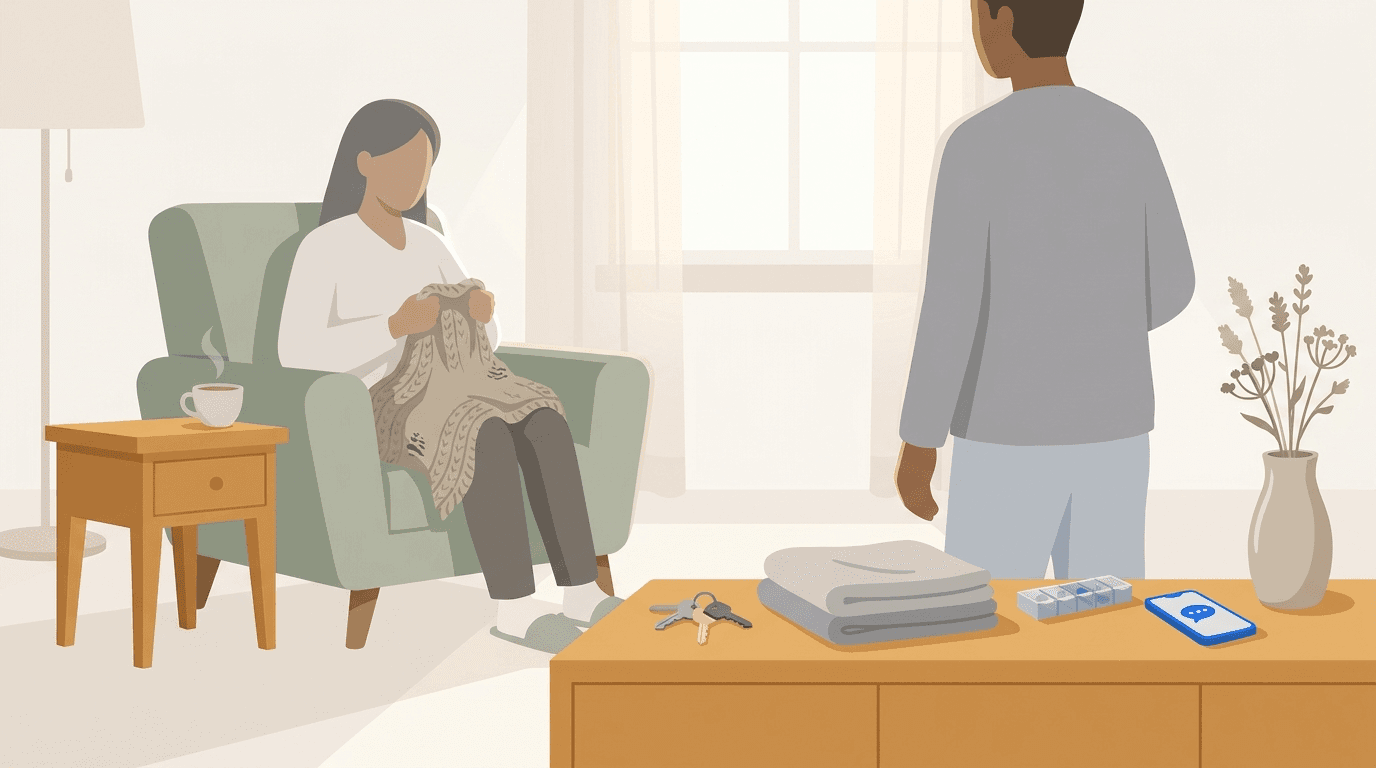
Nobody assigns you the job. There is no family meeting, no signed agreement, no title. One day you simply notice that you are the one your parent calls first, the one who drives to the emergency room, the one who stocks the fridge after appointments. You live closest, so over time, you became the caregiver. And most of the time, your siblings have no idea how heavy that has gotten.
How Proximity Becomes Responsibility
It starts with small, reasonable things. You are fifteen minutes away, so you swing by after work. You are already in the area, so you pick up the prescription. You know the neighbors, so you handle the contractor. None of these moments feel like a decision. They feel like common sense.
But common sense repeated over months becomes expectation. Your siblings stop thinking about logistics because, from their vantage point, things are handled. They are grateful, occasionally. They ask how Mom is doing. They mean well. And you, caught between love for your parent and exhaustion you cannot quite justify out loud, say everything is fine.
The burden is invisible partly because it never announced itself and partly because you have been quietly absorbing it.
What Distant Siblings Often Miss
There is a specific kind of loneliness in being the local sibling. You watch cognitive changes happen gradually, week by week, in a way that a quarterly visit simply cannot capture. You notice the refrigerator filling with expired food. You hear the anxiety in a parent's voice at midnight. You carry the weight of knowing what is coming before anyone else in the family is ready to talk about it.
Distant siblings are not always indifferent. Many genuinely do not see the full picture because they are not present for it. A weekend visit, where everyone puts their best foot forward, can leave a sibling convinced things are fine while the local one is quietly burning out.
This gap in perception is one of the most common sources of resentment in adult sibling relationships during a parent's aging years.
Why the Conversation Feels So Hard to Start
Bringing up the imbalance risks sounding like an accusation. It can feel disloyal to your parent, as if you are complaining about loving them. And there is always the fear that your siblings will push back, insist they would help if you just asked, and make you feel like the problem is your unwillingness to delegate rather than their absence.
So you say nothing. You manage another week. The resentment compounds quietly.
The most effective way through this is to treat it as a coordination problem rather than a fairness grievance. Not: you never do anything. Instead: here are the twelve things that need to happen every month, and I cannot keep doing all of them alone. Who can own which ones consistently?
Specificity matters. Vague offers from distant siblings, like let me know if you need anything, rarely translate into real relief. Concrete recurring commitments do.
What Distant Siblings Can Actually Do
Distance does not have to mean absence. There are meaningful responsibilities that do not require physical presence and that, when owned reliably, take genuine weight off the local sibling.
Regular phone check-ins are one of the most underused options. A sibling in another state can call a parent every weekday morning at the same time, creating a consistent touchpoint that also provides early warning if something feels off. This is not a replacement for in-person care, but it is a real and steady form of presence.
Financial and administrative tasks, insurance correspondence, scheduling specialists, researching care options, coordinating with doctors, all of these can be managed remotely and can represent hours of work each month that the local sibling currently handles by default.
The goal is not perfect equality. Proximity will always mean the local sibling does certain things. The goal is that those things are acknowledged, that other things are genuinely redistributed, and that no one person carries the whole invisible load alone.
Using Technology to Share the Load
One practical shift some families make is using AI-powered daily phone check-ins to ensure a parent hears from someone regularly, without that responsibility falling entirely on the closest sibling. Services like VIPCall allow family members to set up warm, conversational phone calls that keep a parent connected and feeling remembered every single day, and that surface concerns before they become emergencies.
This kind of consistent contact is not meant to replace human connection. It is meant to fill the gaps, and to give the sibling down the road permission to step back from being the only consistent presence.
Recognizing the Cost Before It Becomes a Crisis
Caregiver burnout among local siblings is real, and it tends to build slowly enough that the person experiencing it is often the last to name it. Irritability, interrupted sleep, a sense of dread when the phone rings, withdrawing from your own relationships because there is simply no bandwidth left: these are signs worth taking seriously.
You cannot sustain care for someone you love by depleting yourself completely. That is not selfishness. It is math.
If you are the sibling carrying the most, your family needs you well, not just present. Start the conversation, redistribute the work, and find the tools that make consistency possible without requiring one person to hold everything together alone. See how VIPCall works for the people who matter most.