
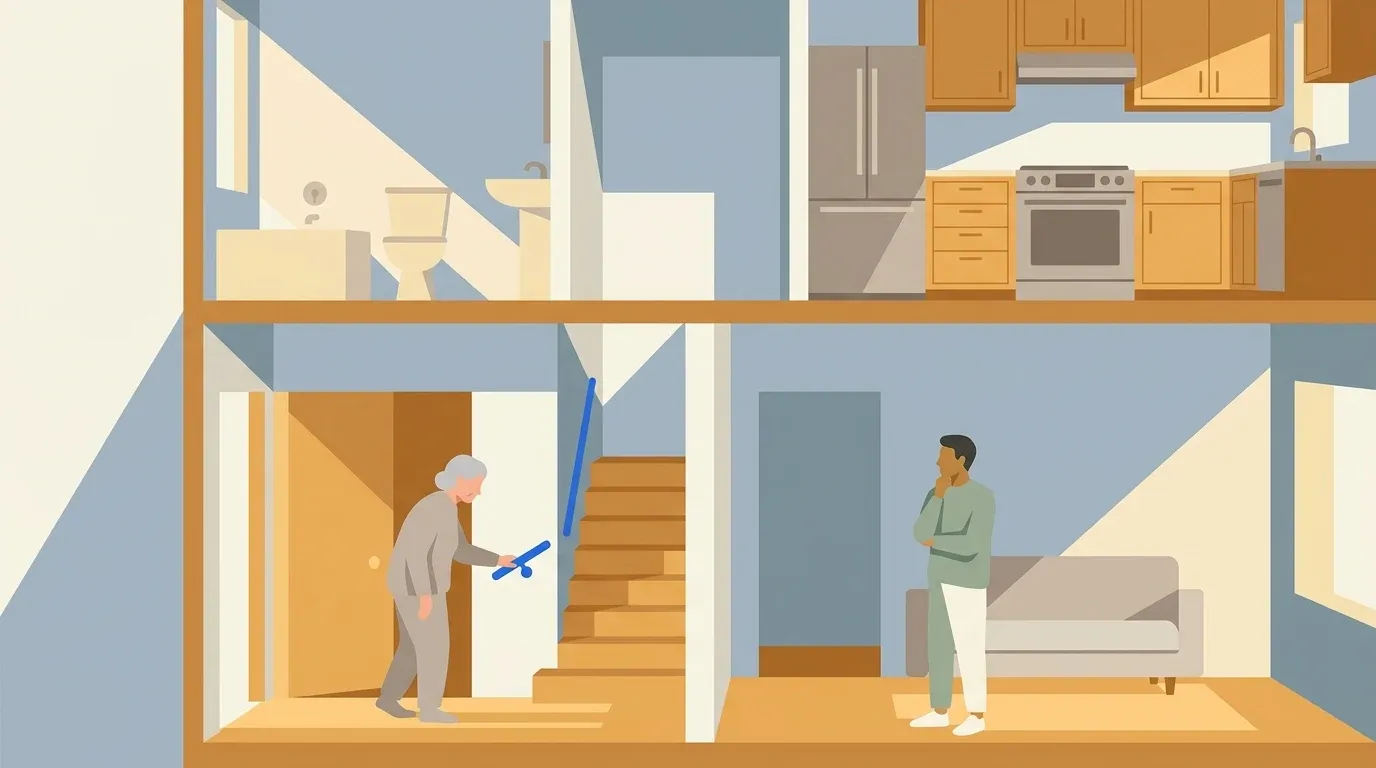
Aging in place can be safe for many older adults, but it depends on specific, changeable factors: fall risk, home hazards, medical stability, and whether someone is actually watching for changes. There's no single yes-or-no answer to is aging in place safe for every family. The real question is whether it's safe for your parent, in their home, right now, and how you'll know if that changes.
That distinction matters because families often treat this as a one-time decision. They walk through the house once, decide it looks fine, and move on. But safety at home isn't a fixed state. It shifts as a parent's balance, memory, medications, and daily habits shift. The National Institute on Aging recommends planning before extensive care is needed and reassessing home safety as needs change, which is a very different approach than deciding once and hoping for the best.
Is Aging in Place Safe for Your Parent's Specific Situation?
For most parents without major mobility or cognitive issues, aging in place is reasonably safe with the right precautions and support in place. The honest answer depends less on the house itself and more on fall risk, medication management, and whether someone notices small changes before they become emergencies.
Start with fall risk, because it's the single biggest safety variable for older adults living at home. More than one in four people age 65 and older fall each year, according to the National Institute on Aging, and falls can lead to hospitalization, long-term disability, or even death. The same NIA guidance points to specific, identifiable causes: muscle loss, balance and gait problems, postural hypotension (a drop in blood pressure when standing), and hazards inside the home itself, like loose rugs, poor lighting, or stairs without handrails. None of these are abstract risks. They're things a family can actually assess, and in many cases, actually fix.
This is also why aging in place remains the preference for most older adults, even as safety questions loom. The AARP Home and Community Preferences Survey 2024 found that 75% of adults age 50 and older want to remain in their homes, and 73% want to remain in their communities. That preference is real and worth respecting. It just has to be paired with a clear-eyed look at what would need to be true for it to stay safe.
What Does Aging in Place Mean, Practically, for Safety?
Aging in place means an older adult continues living in their own home and community rather than moving into assisted living or a nursing facility. In practice, this usually isn't an all-or-nothing arrangement. The NIA notes that home-based support can combine informal caregivers (family and friends), formal caregivers (paid home care), and community services, layered in as needs grow.
That layering matters for safety planning. A parent who's independent today may need part-time help in a year, and more after that. The AARP Home and Community Preferences Survey 2024 found that a substantial share of adults 50 and older expect they will eventually need to move, and a similar share expect to modify their homes to stay, most commonly anticipating bathroom modifications and access changes like ramps or wider doorways. In other words, most families planning to age in place are already assuming the home will need to change. If you're weighing what those changes look like and what they cost, our guide to home modifications for an aging parent walks through the most common and highest-impact fixes.
What Are the Disadvantages of Aging in Place?
The biggest disadvantages are reduced built-in social contact, more responsibility landing on family caregivers, and a higher chance that small problems go unnoticed until they become urgent. A staffed care setting has people checking in throughout the day by design. A private home does not, unless a family builds that in deliberately.
This is often the gap that turns a safe situation into an unsafe one. A parent can have a fully modified, hazard-free home and still be at risk if no one would notice a missed meal, a medication mix-up, or a fall until days later. We cover this tradeoff in more detail in the disadvantages of aging in place, including where the format breaks down for parents with more complex medical needs.
How Do Families Pay for Aging in Place Safely?
Costs for aging in place vary enormously depending on how much support a parent needs, and that support is rarely fully covered. Medicare does cover eligible part-time or intermittent skilled nursing and therapy ordered by a provider and delivered through a Medicare-certified agency, but according to Medicare's own coverage guidance, it does not pay for 24-hour home care, meal delivery, or custodial personal care when that's the only type of care needed. That gap catches a lot of families off guard, especially when a parent needs help with daily tasks rather than medical treatment.
Because the math changes depending on how much paid support is involved, it's worth running the numbers before committing to a plan. Our breakdown of aging in place cost vs. assisted living compares both paths side by side so you can see where the safety and the budget actually intersect. For anything involving specific benefits, insurance, or legal planning, talk with a licensed elder law attorney, benefits counselor, or financial advisor who can look at your parent's actual situation rather than general guidance.
Warning Signs That Aging in Place May No Longer Be Safe
A few signs tend to show up before a crisis does: unexplained bruises or a fall your parent downplays, missed medications, weight loss, a home that's gotten noticeably more cluttered or neglected, or your parent seeming confused about things they used to manage easily. Any one of these is worth a closer look. Several together are worth a real conversation, and possibly a call to their doctor.
If your parent has a sudden fall, chest pain, confusion, or any acute medical event, call emergency services immediately rather than waiting to assess the situation yourself. For non-emergency concerns, their primary care provider is the right first call to evaluate what's changed and whether it affects the safety of staying at home.
Where Regular Contact Fits Into the Safety Picture
Most of the safety factors above, fall risk, medication issues, gradual decline, are things a family notices through pattern, not through a single visit. That's the part that's hardest to solve with a ramp or a grab bar. It requires someone checking in often enough to notice when something's off.
This is where VIPCall fits into the decision, not as a replacement for home modifications, medical care, or in-person caregiving, but as the steady layer that catches changes between them. VIPCall makes a warm daily phone call to your parent, no app required on their end, and turns that call into a caregiver update the family can actually use: how they sounded, what came up, anything that seems different from the day before. For siblings coordinating care from different cities, or for a family trying to catch a decline early instead of after a fall, that consistent record of between-visit context can be the difference between reacting to an emergency and heading one off.
Aging in place can absolutely be safe, but safety isn't something you confirm once. It's something you track. See how VIPCall works for the people who matter most and make daily contact part of how your family keeps your parent safe at home.