
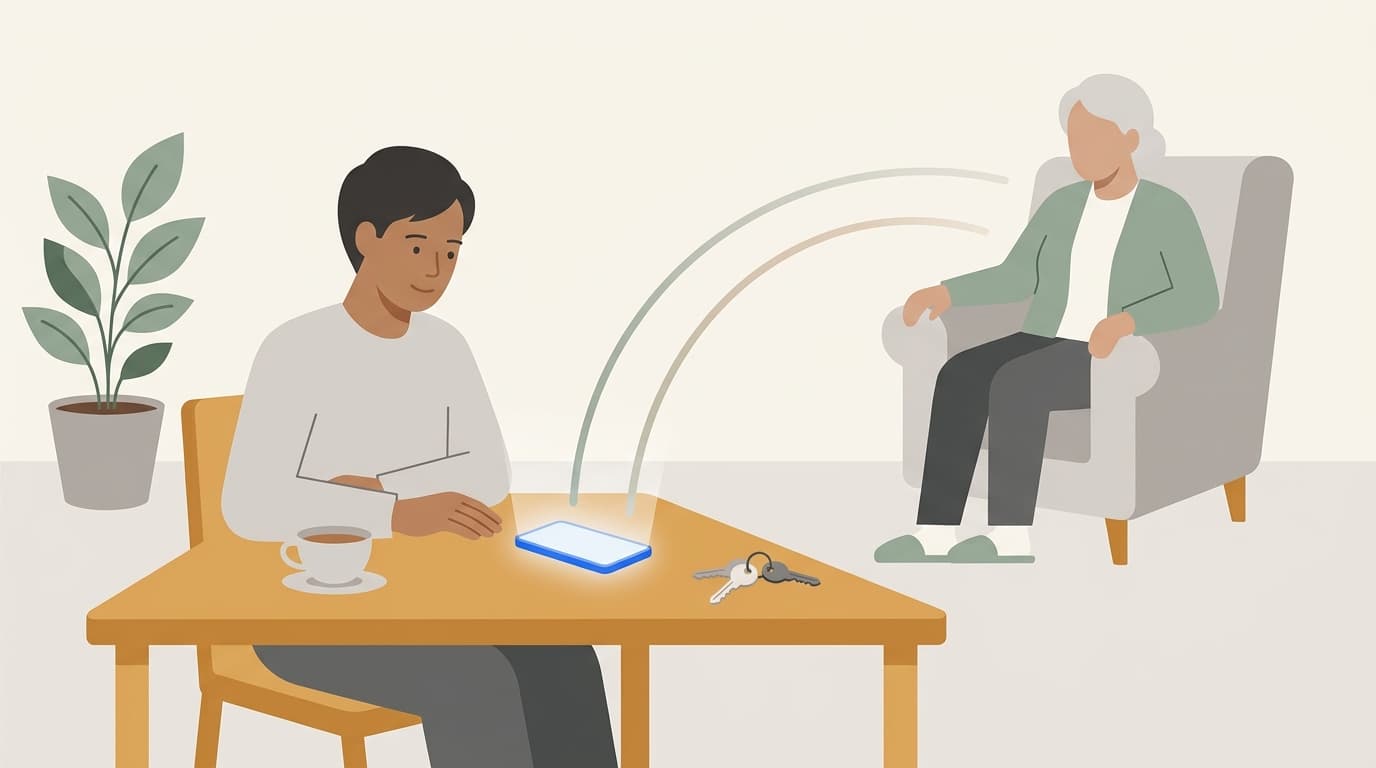
Most families do not realize there is a gap in their care plan until something falls through it. A parent misses medications for three days. A mood shift goes unnoticed for a week. A minor fall happens and no one finds out until the next scheduled visit. Daily check-ins exist precisely to close that gap — not by adding surveillance or complexity, but by creating a consistent, low-friction signal that tells families and care teams what they actually need to know each day.
This guide is written for the people building or recommending those systems: home care agencies, discharge planners, care managers, senior living operators, and the sibling care teams trying to coordinate across zip codes. The goal is not to describe every product on the market but to give you a clear framework for deciding what kind of check-in program fits the people in your care.
Why Consistency Is the Point
The core value of a daily check-in is not the content of any single call. It is the pattern. When someone receives a check-in every day at roughly the same time, you gain the ability to detect deviation. A person who normally sounds cheerful and reports sleeping well is now flat, reporting poor sleep for the fourth consecutive day. That pattern is clinically and emotionally meaningful in a way that a quarterly intake form will never capture.
Emergency response systems — medical alert buttons, fall detectors, passive motion sensors — are reactive by design. They respond when something has already gone wrong. Daily check-ins are proactive. They surface the conditions that precede a crisis: social withdrawal, declining appetite, missed medications, low-grade confusion, or growing anxiety about a symptom the person has not yet mentioned to anyone.
The Four Components of an Effective Check-In System
Regardless of who conducts the check-in — a family member, a care coordinator, or an AI-powered phone service — an effective system needs four things.
Consistent timing. The call should happen at roughly the same time each day. Predictability reduces anxiety for the older adult and makes deviation detectable for the care team.
Structured but conversational questions. The check-in should cover mood, sleep, physical symptoms, medication adherence, and social contact. The framing should feel like a friendly call, not a clinical intake.
A clear escalation path. Someone needs to receive an alert when the answer pattern suggests risk. That person needs enough context to act — not just a flag, but a summary of what was said and how it compares to recent check-ins.
A record accessible to the full care team. If a home health aide, a discharge nurse, and an adult child are all involved in a person's care, they all need access to the same signal. Siloed check-ins create duplicate effort and missed handoffs.
Matching the Tool to the Risk Level
Not every aging parent needs the same check-in model. A relatively independent 74-year-old living alone after a knee replacement has different needs than an 82-year-old with early-stage dementia and a history of falls.
For lower-acuity situations, AI-powered daily phone calls are often the most scalable and sustainable option. They require no smartphone, no app, and no new device from the older adult. The call arrives on the phone they already use. Summaries go to family members or care coordinators. Escalation triggers route to whoever is on call.
For higher-acuity situations, daily phone check-ins work best as one layer in a broader plan that also includes in-person visits, medical alert hardware, and regular clinical assessment. The check-in fills the space between those touchpoints — the 23 hours a day when no one else is looking.
What Care Organizations Should Build Into Their Workflow
For agencies and operators, the operational question is not whether to offer daily check-ins but how to make them sustainable at scale. Assigning human staff to make daily calls across a full caseload is expensive and inconsistent. Staff turnover disrupts the relationship. Call volume creates documentation burden.
AI-powered check-in services solve the scale problem without sacrificing the human signal. The call is warm and conversational. The older adult speaks naturally. The system routes structured summaries and flags to your coordinators so staff time goes toward response, not routine outreach.
The key workflow integration points are post-discharge follow-up, transition-of-care monitoring, and ongoing wellness programs for clients aging in place. In each context, daily check-ins reduce readmission risk, catch early deterioration, and give families the reassurance that keeps them engaged with your organization rather than searching for alternatives.
When Daily Check-Ins Are Not Enough
A check-in system built on self-report has one important limitation: it depends on the person being able to report accurately. Individuals with moderate to advanced dementia may not be able to answer reliably. People in acute mental health crises may minimize symptoms. Anyone experiencing sudden medical deterioration needs emergency response, not a wellness call.
Be direct with families about this. Daily check-ins are a proactive wellness layer, not a substitute for emergency response hardware or skilled nursing care. The combination of the right tools at the right acuity level is what creates genuine safety.
If your agency or care team is ready to build a daily check-in program that scales, produces useful signal, and keeps families connected without adding burden, see how VIPCall supports care teams and family communication.