
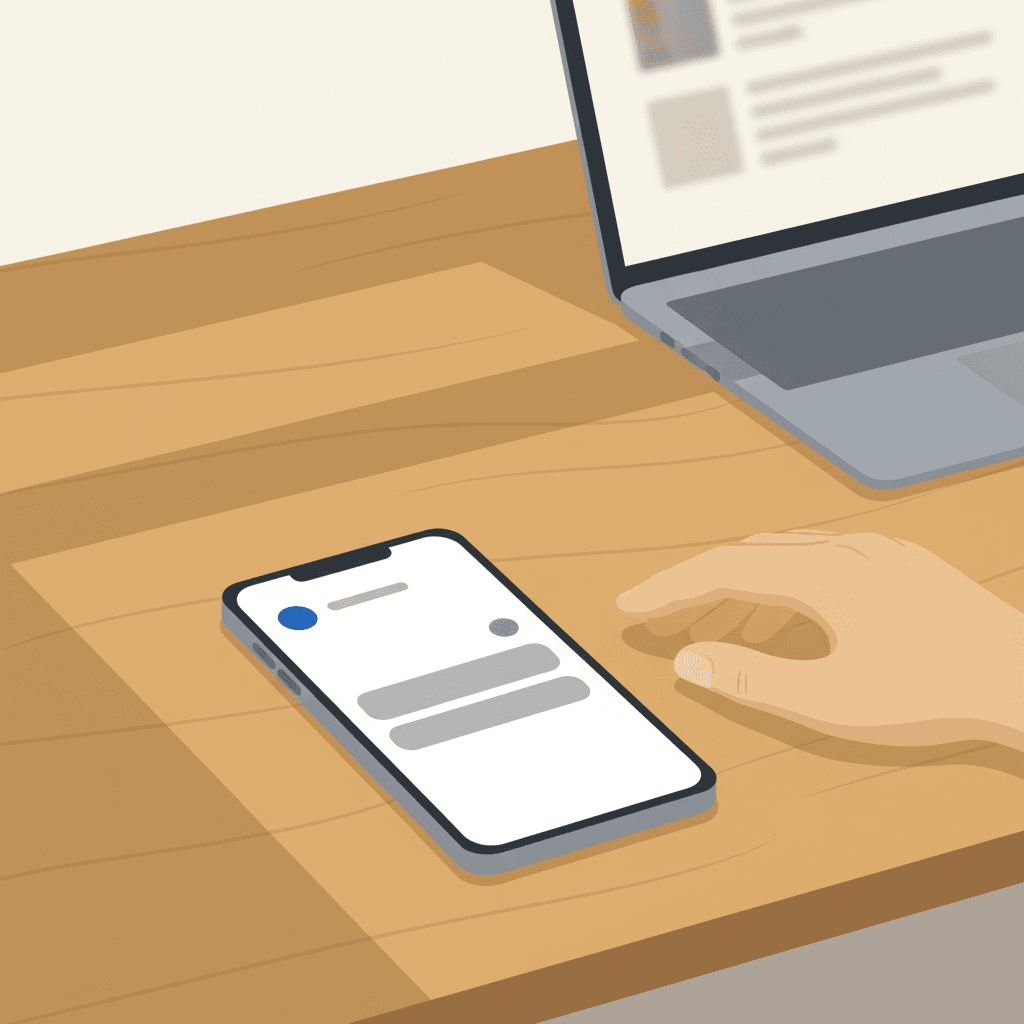
You post a photo. Forty people double-tap it. A few leave a fire emoji. You put your phone down and, somehow, feel more alone than before. That quiet disappointment is not a personal failure. It is what happens when you mistake broadcasting for connection.
The Difference Nobody Talks About
Broadcasting is what most of us do on social media. We share an update, a photo, a milestone, and send it out to everyone at once. The audience is passive. The exchange is shallow. It feels social because the platform is called social, but it is closer to publishing than talking.
Connecting is different. It is specific. It is directed at one person. It says, "I was thinking about you." It requires something from both sides. A real conversation, a phone call, a voice note, even a thoughtful text, these are acts of connection. They cannot be automated with an algorithm or measured in impressions.
The problem is that broadcasting is easy and connecting is effortful. So over time, most of us drift toward the easier thing, and our actual relationships quietly starve.
Why Broadcasting Feels Like Enough (But Isn't)
Social media is engineered to make broadcasting feel rewarding. Notifications, likes, and comment counts all trigger small dopamine hits. The platform tells you the post performed well. It does not tell you whether your sister knows you are thinking about her, or whether your oldest friend feels remembered.
Researchers have found that passive social media use, scrolling and consuming without direct interaction, consistently correlates with higher rates of loneliness and lower relationship satisfaction. Even active broadcasting, posting and collecting reactions, does not reliably close that gap. What actually moves the needle is direct, personal communication.
You already know this. You can feel the difference between getting 80 likes on a birthday post and receiving one phone call from someone who wanted to hear your voice.
The Slow Erosion of Your Closest Relationships
Here is the quiet damage. When you follow someone on social media, you start to feel like you are keeping up with them. You see their holiday photos. You know they got a promotion. You watch their stories. But you haven't actually spoken in eight months.
That is not a relationship being maintained. That is a relationship being observed. And there is a meaningful difference.
The people you care about most need more than your passive viewership. They need the version of you that shows up in their inbox, their voicemail, their front door. Broadcasting gives them a performance. Connecting gives them you.
This matters most with the people who are furthest away or most isolated. An elderly parent living alone does not feel less lonely because they saw your Instagram update. A friend going through a hard time does not feel supported because they are in your follower count. Direct contact is the thing that actually reaches them.
What Shifting Looks Like in Practice
Shifting from broadcasting to connecting does not require deleting your accounts or staging a dramatic digital detox. It requires a change in habit.
Start small. Pick one person each day who matters to you, and reach out directly. Not a tagged post. Not a reaction to their story. A message, a call, a question that shows you were thinking specifically about them. That is it.
The compound effect of that habit over weeks and months is significant. Relationships that felt distant start to feel close again. People who had drifted back into your orbit. You stop wondering whether your important relationships are surviving and start actively building them.
For families managing real distance, this can feel logistically hard. Busy schedules, time zones, caregiving responsibilities, the mental load of coordinating across multiple people. That is exactly where structure helps. Regular, reliable outreach, whether through personal discipline or tools designed to support it, removes the friction that lets connection slip.
Your Feed Is Not Your Life
Your feed shows curated moments from dozens or hundreds of people. It is busy and colorful and endlessly refreshing. But it is a terrible substitute for the five people you would call in a crisis.
Those five people need actual contact. Not your content.
The shift from broadcasting to connecting is not about using social media less. It is about using your attention more deliberately. It is about asking yourself, before you post, whether the people who matter most have actually heard from you today.
If you are ready to make real connection a daily practice rather than an occasional impulse, VIPCall is built exactly for that. See how VIPCall works for the people who matter most, and give your most important relationships the consistent attention they deserve.