
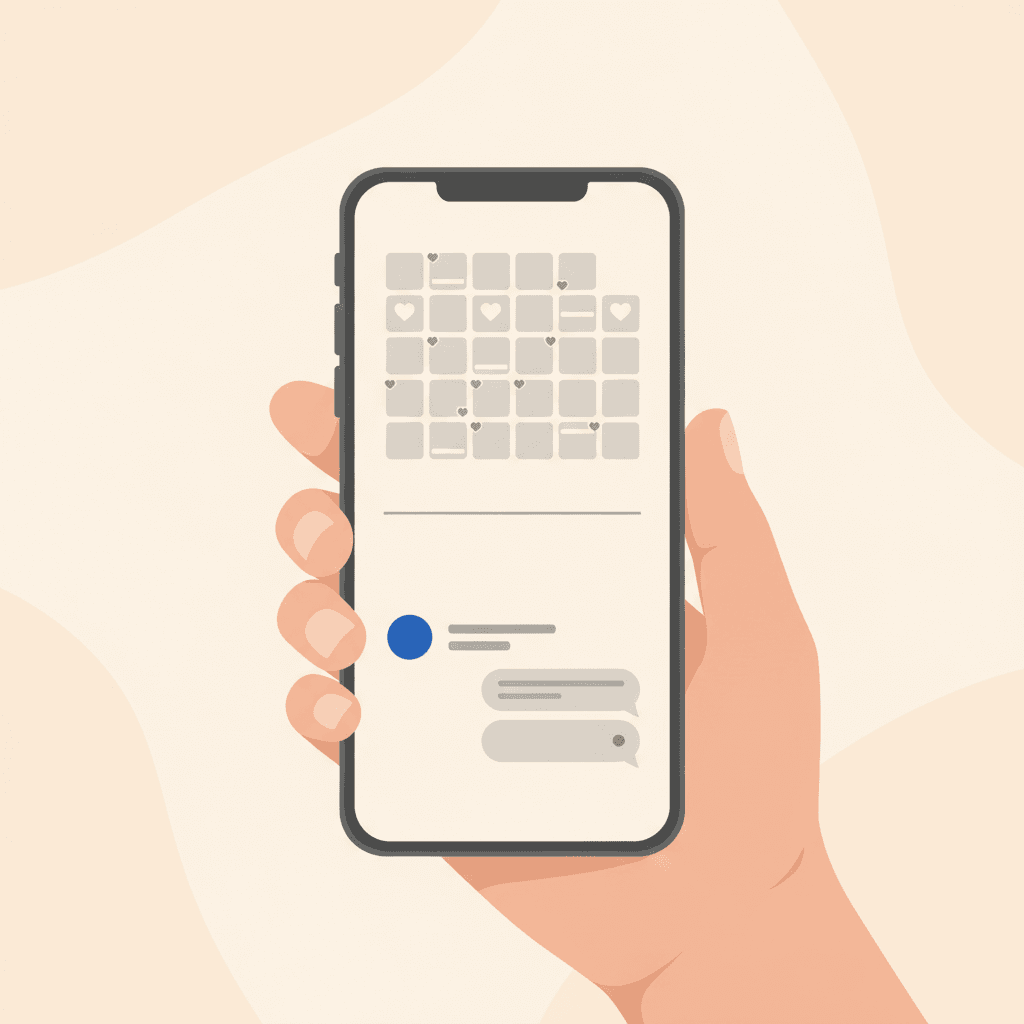
You liked your mum's photo. Your college roommate reacted to your post. Your dad has been active on Facebook this week. On paper, everyone is connected. In practice, nobody has really spoken to anyone.
This is the quiet trap at the centre of modern social life, and most of us have walked into it without realising. We swapped phone calls for likes, replaced long emails with heart emojis, and told ourselves we were staying in touch. We were not. We were performing connection without doing the work of it.
What a Like Actually Does to Your Brain
A like is a dopamine delivery mechanism. When someone taps that button, your brain registers a tiny hit of social approval and rewards you for it. It feels good for about four seconds. Then it fades, and you need another one.
The problem is that dopamine rewards do not build anything lasting. They are not the same as feeling heard, understood, or genuinely cared for. A liked photo does not tell your mum you were thinking of her. It tells an algorithm you engaged with content. Those are very different things, and somewhere underneath all the scrolling, we know it.
Studies on passive social media use, the kind where you scroll, tap, and move on without a real exchange, consistently link it to higher rates of loneliness and lower relationship satisfaction. The more time people spend liking posts instead of talking to each other, the more disconnected they tend to feel. The tool designed to bring us together is, for a lot of people, making things worse.
The Illusion of Keeping Up
Social media creates a convincing illusion that you know what is happening in someone's life. You saw the holiday photos. You watched the birthday reel. You know they got a new job because they posted about it. So you feel caught up. You feel like you have been present.
But knowing about someone's life is not the same as being part of it. Your elderly parent might post cheerful photos while privately struggling with loneliness. Your friend might share highlight reels while going through something difficult they would never put online. The feed shows you what people choose to perform, not how they actually are.
Real connection requires asking. It requires listening to the answer. A like cannot do either of those things.
Why We Built Something Different
When we started working on VIPCall.ai, this gap was the thing we kept coming back to. The people in our lives who matter most, ageing parents, old friends, relatives who live far away, deserve more than a reaction emoji from us. They deserve actual contact. An actual voice. A real conversation.
But life is genuinely busy. Intentions are real, and follow-through is hard. The week disappears and you still have not called your dad. The month turns and your grandmother has not heard your voice. This is not a character flaw. It is a scheduling problem, and scheduling problems have solutions.
VIPCall.ai places real phone calls on behalf of the people who matter to you. The calls are warm and conversational, personalised to the person receiving them, and experienced as genuine contact rather than a notification or a prompt. It is not a like. It is a call.
Consistency Is the Thing That Actually Matters
One phone call a year does not maintain a relationship. Neither does a birthday comment or a Christmas message. What actually builds closeness over time is consistent, repeated contact. Small moments, regularly. The kind of thing that says: I thought of you today, not just on your birthday.
This is what daily check-ins do that social media never can. They create rhythm. They signal that someone is being thought of, not when they happen to post something, but reliably, as a matter of course. For elderly family members especially, that rhythm can be the difference between feeling part of someone's life and feeling forgotten.
Likes are reactive. You see something, you respond. Check-ins are intentional. You reach out because the person matters, not because the algorithm surfaced their content.
What Real Staying in Touch Looks Like
It does not have to be a long call. It does not have to cover everything. A five-minute conversation that asks how someone is feeling and actually waits for the answer does more for a relationship than a year of passive likes.
The people in your life who matter most are not content to be engaged with. They are people to be known. That takes voice, time, and presence, even if the presence is brief and the voice is assisted by technology.
If you are ready to move beyond the like and build something more real with the people who matter most, see how VIPCall works for the people who matter most.