
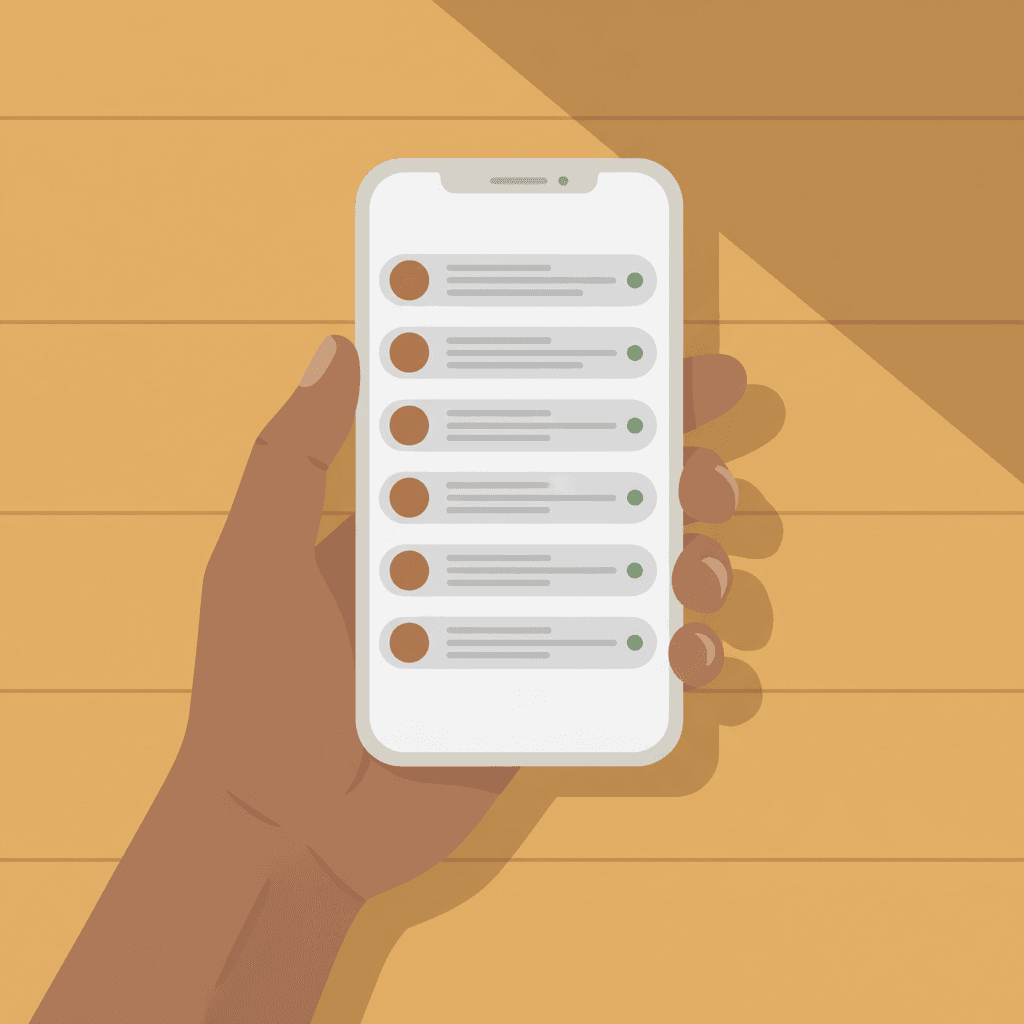
The Group That Decided to Actually Know How Everyone Is Doing
The Real Problem Is Not Effort, It Is Structure
Most groups fail to stay connected not because the love is gone but because the structure never existed. Everyone wants to stay close. Nobody wants to be the one who always texts first. So nothing happens until something bad forces a reunion, and by then the distance has already done its work.
Group chats feel alive but rarely go deep. A meme thread and a few birthday messages a year does not tell you how someone is actually doing. And organizing anything real, a call, a visit, a check-in chain, falls to you by default because you are the one who cares enough to do it.
The burnout is not dramatic. It is slow. It is the feeling of sending the fifth unanswered message to the thread or being the only one who follows up after someone mentions they are not doing well. You do not resent them, exactly. You just wish the group had better bones.
What a Real Check-In Ritual Actually Looks Like
The groups that stay genuinely close share one thing: a low-friction recurring ritual that does not require heroic effort to maintain. Not a big group call that takes three weeks to schedule. Not a Slack channel with fifteen unread threads. Something simple, personal, and consistent.
A daily or weekly check-in that reaches each person individually, in a format that does not demand a performance, is the closest thing to actually knowing how someone is doing. A short conversation. A direct question. A moment that says: you are on someone's radar today.
The challenge has always been that someone has to initiate that for every person in the group. And that someone has always been you.
How AI-Powered Check-Ins Change the Math
VIPCall runs daily phone check-ins powered by AI, and it does exactly what it sounds like. It calls the people you designate, asks how they are doing, and surfaces what you need to know. No scheduling, no waiting for someone to text back, no guessing.
For a friend group or small community, this flips the model. Instead of you being the one who notices, the system notices with you. Instead of one person holding the awareness of the whole group, everyone gets checked in on in a way that feels personal and direct.
You set it up once. It runs. Your friend who moved three states away gets a call. Your neighbor who had surgery gets a call. The person in the book club who went quiet last month gets a call. And you find out how they are doing before it becomes a crisis you only hear about after the fact.
The Group That Actually Knows How Everyone Is Doing
Imagine your group one year from now where nobody has fallen through the cracks. Where you found out someone was struggling early enough to actually help. Where the ritual runs whether or not you have capacity that week. Where people feel seen on a regular basis, not just when something forces a reunion.
That group exists. You can build it. The missing piece is not more motivation from you, it is a structure that does not collapse when you are the one having a hard week.
The connection your group has is real. It just needs better infrastructure than a group chat.
You Do Not Have to Be the One Who Always Texts First
Being the organizer does not mean being the only one who cares. It means you were willing to build something others benefit from. The best thing you can do for your group right now is take the daily awareness off your plate and put it on a system designed for exactly that.
Check in on the people you actually care about without carrying the whole thing alone. See how VIPCall works for the people who matter most and find out what your group looks like when the infrastructure finally matches the love.