
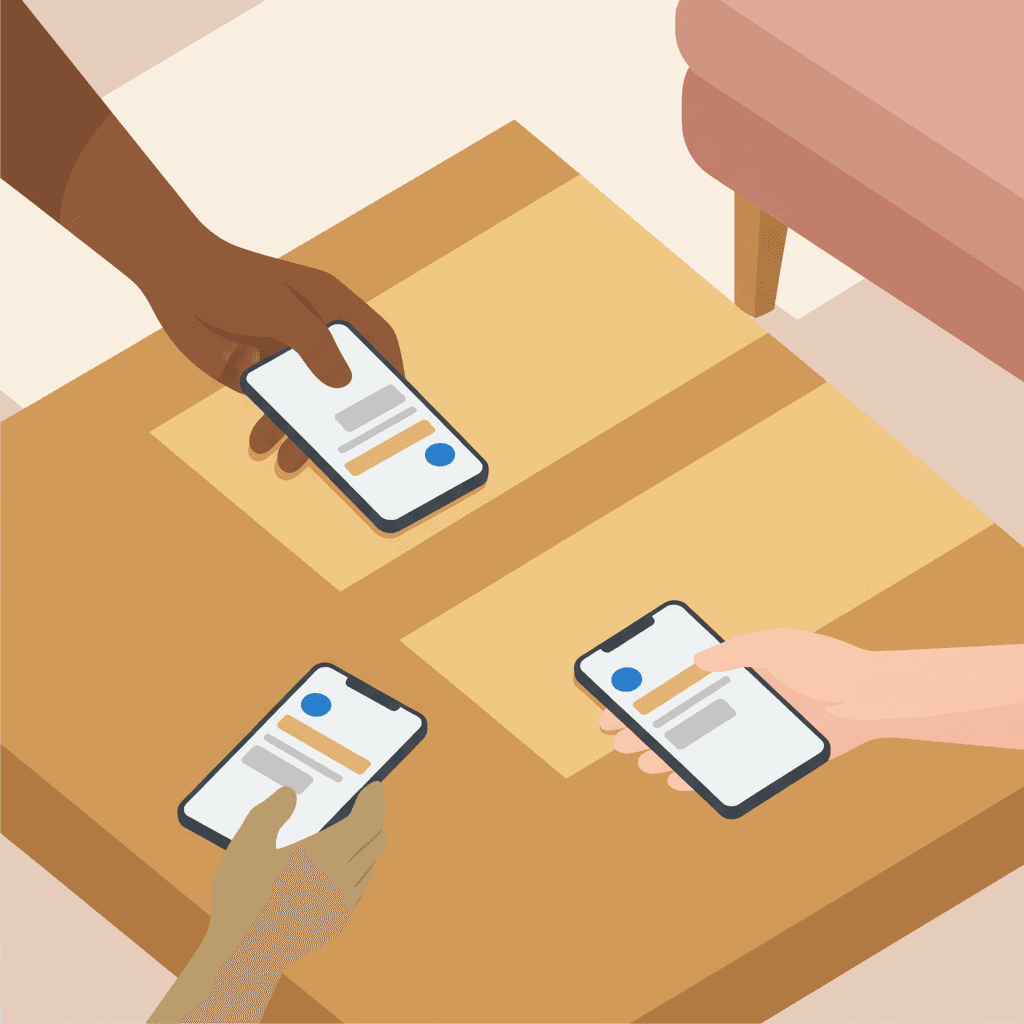
Most friend groups share the same quiet fear: that distance will slowly turn close friends into people you used to know. You move cities, start new jobs, have kids, change time zones — and suddenly the group chat goes from daily memes to birthday messages once a year. The friendship isn't over, but it's thinning. Daily check-ins are one of the most effective ways to stop that drift, and more friend groups are building this habit deliberately rather than hoping connection just happens on its own.
Why Group Chats Aren't Enough
Group chats feel active, but they're passive by design. Someone posts something funny, a few people react, and then life moves on. There's no real exchange, no genuine update on how anyone is doing, and no accountability to actually show up for each other. The people who are loudest in the chat get the most presence; the quieter ones fade to the margins.
A daily check-in flips this. Instead of waiting for someone to post, there's a shared expectation that everyone touches base. It's a small act with a big signal: you matter enough for me to reach out today.
What a Friend Group Daily Check-In Actually Looks Like
The format matters less than the consistency. Some groups do a rotating voice note — one person sends a two-minute audio update each morning, and others reply when they can. Others commit to a daily text prompt, like answering a shared question. Some friends schedule a short standing call, five to ten minutes, a few times a week.
The groups that stick with it tend to share a few things in common:
- They keep the format simple enough to do on a hard day, not just a good one
- They have a clear structure so no one has to decide what to say
- They've agreed upfront that missing a day is fine, but ghosting for a week is worth checking on
- They treat the check-in as a ritual, not a task
A simple format that works well: share one thing going well, one thing that's weighing on you, and one question for the group. It takes two minutes and consistently produces more real conversation than an hour of idle chat.
The Problem of Who Goes First
The biggest reason daily check-ins collapse in friend groups isn't lack of care — it's the initiation problem. Nobody wants to be the person who always texts first. It starts to feel one-sided, then exhausting, then resentment creeps in.
Rotating the responsibility helps. Each person takes a week as the check-in lead. They send the first message or make the first call. Everyone else responds. This small shift distributes the emotional labor and keeps things fair.
Another option is to remove the initiation burden entirely. AI-powered check-in services can prompt each person individually, so no one has to go first. The system reaches out, collects responses, and keeps the group connected without anyone needing to coordinate. For busy adults whose schedules rarely align, this kind of structure is the difference between a check-in that actually happens and one that exists only in good intentions.
How Check-Ins Build Something Group Chats Can't
Consistency creates intimacy. When you know what's happening in your friend's life day to day, you don't have to do a two-hour catch-up call every few months to feel close. You already know their boss is being difficult. You already know they went on a second date. You're woven into the small fabric of each other's lives, not just the highlight reel.
That texture is what separates a close friendship from a friendly acquaintance. And it's almost impossible to build that texture through occasional contact, no matter how much warmth exists between people.
Check-ins also create accountability in the best sense. When your friend group knows you're having a rough week, they follow up. When you say you're going to try something new, someone asks about it tomorrow. That gentle, caring accountability is one of the less-talked-about benefits of daily connection.
When Distance Feels Smaller
The strange thing about daily check-ins is that they make physical distance feel less significant. When you speak to someone every day, geography becomes background noise. You stop saying "I miss you" out of sadness and start saying it out of genuine warmth, because the connection never really left.
Friend groups that build this habit consistently report feeling less isolated, more grounded, and more confident that their closest relationships are being tended to rather than left to chance.
If your friend group has been meaning to stay closer but hasn't found a system that works, a daily check-in ritual is worth trying for thirty days. Keep it short, keep it simple, and remove as much friction as possible from the initiation. See how VIPCall works for the people who matter most and find out how an AI-powered daily call can help your group build the habit without anyone having to carry it alone.