
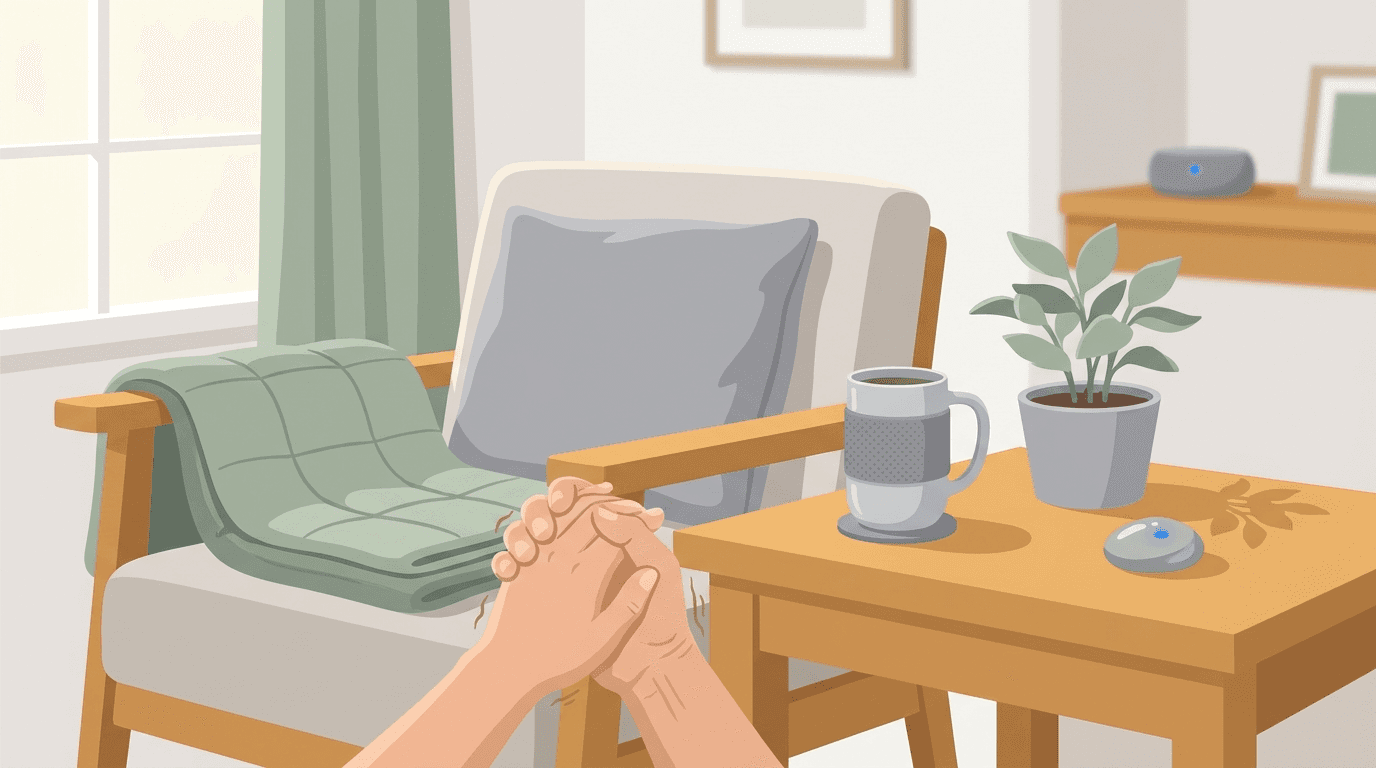
Parkinson's disease does not follow a predictable schedule. A parent who seemed steady and sharp on Sunday can have a rough Tuesday with stiff movement, slurred speech, and low mood before the week is even half done. That unpredictability is one of the hardest parts for families to manage, especially when you live an hour away or are juggling your own job and household alongside your worry. Daily check-ins are not a cure for that uncertainty, but they are one of the most practical tools families have.
Why Daily Contact Matters More Than Occasional Visits
Parkinson's symptoms fluctuate because of medication timing, sleep quality, stress, and factors that are not always easy to pin down. A visit every weekend gives you a snapshot of one or two days. A brief daily call gives you a pattern. That pattern is what lets you notice when something has quietly shifted.
Families who check in daily are more likely to catch a fall early, notice that a parent stopped mentioning afternoon walks, or pick up on increasing confusion around medication schedules. None of those things tend to announce themselves dramatically. They show up in small details across several conversations.
What to Listen For on Every Call
When your parent has Parkinson's, listening is as important as talking. Pay attention to:
- Speech quality. Parkinson's often makes the voice softer, more monotone, or harder to understand. A noticeable change from their baseline is worth noting.
- Response speed. If they seem slower to find words or follow the conversation, that can reflect a harder symptom day.
- Medication mentions. Did they take their dose on time? Missed or delayed medication is one of the most common triggers for a sudden dip in function.
- Mood tone. Depression and anxiety are underrecognized symptoms of Parkinson's. A parent who sounds flat, withdrawn, or more irritable than usual deserves a gentle follow-up.
- Physical events. Ask directly whether they had any stumbles, near-falls, or difficulty with a specific task. Many parents downplay these to avoid worrying their children.
Keeping brief notes after each call helps you spot trends that a single conversation would never reveal.
The Coordination Problem Families Face
Most families do not have one designated person who handles all the check-ins. The responsibility tends to drift between siblings, partners, and other relatives, which creates gaps. One week nobody called Tuesday because everyone assumed someone else did. A month later, a medication problem that had been building for weeks surfaces as a crisis.
Building a reliable daily check-in system means either committing to a shared schedule with clear ownership or finding a tool that handles consistent contact automatically. When the pressure falls entirely on one person, caregiver fatigue sets in fast, and the calls become shorter, less attentive, and eventually less frequent.
How AI-Powered Calls Fill the Gap
AI-powered daily check-in calls are not a replacement for real family conversation, and they are not a medical monitoring device. What they do is provide a consistent, structured daily touchpoint that does not depend on anyone's schedule, energy level, or memory. A call goes out every day at the same time, asks meaningful questions, and routes anything concerning back to the people who need to know.
For a parent with Parkinson's, routine matters enormously. Knowing a call is coming at 10 a.m. is itself a small anchor in the day. For the family, knowing that daily contact is happening even on the days nobody had time to call personally reduces background anxiety significantly.
AI check-ins work best as a complement to family calls, not a replacement. They cover the days when life intervenes, provide a consistent baseline record, and make it easier for families to spot changes over time.
Building a Check-In Routine That Actually Sticks
The most effective check-in routines are simple enough to maintain through the harder weeks. A few things that help:
- Set a consistent time that aligns with your parent's best window of the day, often mid-morning after medication has taken effect.
- Keep calls focused but warm. Ten minutes of real attention is more useful than a rushed thirty-minute call.
- Agree as a family on who gets notified if something sounds off, and make that path clear before you need it.
- Do not wait for a crisis to start. Beginning a check-in routine while your parent is relatively stable makes the baseline much clearer.
Parkinson's is a condition that rewards vigilance without panic. Regular contact keeps you informed, keeps your parent connected, and gives everyone a little more ground to stand on.
If you want a reliable daily check-in system for a parent with Parkinson's, see how VIPCall works for the people who matter most.