
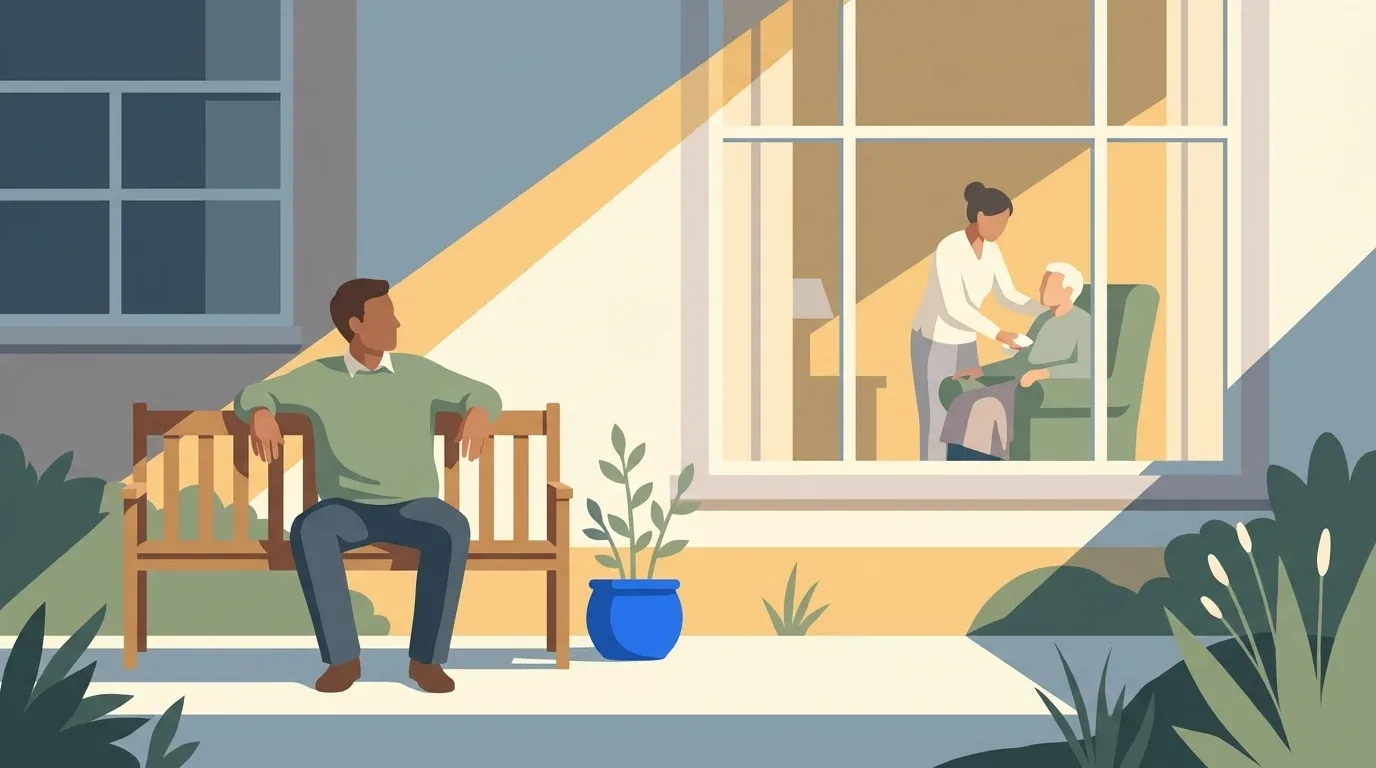
Why Working Caregivers Feel Guilty About Rest
Stepping back from caregiving does not mean stepping away from your parent, and a caregiving break without guilt starts with separating rest from abandonment. Most family caregivers were never told that recovery is part of the job, so the first day off can feel like a failure instead of a plan. That confusion is common and it is not a character flaw.
Guilt shows up because caregiving often blends identity with duty. When a role becomes central to how you see yourself, handing it off, even for a weekend, can feel like losing part of who you are. Add in a sibling who thinks you should be doing more, or a parent who says "I'm fine" while clearly struggling, and guilt becomes the default emotion attached to every hour you are not physically present. Recognizing that pattern is the first step toward changing it.
How Do You Take a Caregiving Break Without Guilt?
Taking a caregiving break without guilt means building a plan with clear coverage, a defined return time, and a way to stay informed, so stepping away feels responsible instead of reckless. The goal is not to stop caring. It is to trade constant presence for a system you trust.
Start by naming what you are actually afraid will happen while you are gone. Is it a fall, a missed medication, a lonely afternoon, or a phone call that goes unanswered? Once you name the specific fear, you can build a specific answer to it: a neighbor who checks in at lunch, a sibling who takes the evening shift, or a daily call that confirms your parent is okay and flags anything unusual. Guilt tends to shrink when uncertainty shrinks. A written plan, shared with the people involved, turns "I hope everything is fine" into "here is how we will know."
How Do You Know If You Have Caregiver Burnout, and What Are the Stages?
Caregiver burnout shows up as persistent exhaustion that does not improve with a normal night's sleep, along with irritability, a sense of dread before caregiving tasks, and pulling away from friends or hobbies you used to enjoy. Physical signs matter too. The CDC treats family caregiving as a public health issue and specifically tracks frequent mental distress among caregivers age 45 and older, because the toll is measurable and widespread, not anecdotal. If you notice you are getting sick more often, forgetting appointments, or feeling numb rather than sad, those are signals your body is asking for relief, not proof that you are failing.
Sleep deprivation deserves its own mention. The same CDC brief notes that sleeping fewer than seven hours a night can affect caregiver health and interfere with the ability to provide good care. If exhaustion is already affecting your judgment or patience, that is not a future risk. It is happening now, and it is a reason to arrange a break rather than wait for a crisis to force one.
What Are the Three Common Stresses of a Caregiver?
Most caregivers describe the same three pressures. The first is physical strain: lifting, driving, disrupted sleep, and a body that does not get to fully rest. The second is emotional strain: grief for the parent who is changing, guilt over imperfect decisions, and the isolation of a role few people fully understand. The third is logistical strain, meaning coordination. According to the 2025 AARP and National Alliance for Caregiving study, seven in ten caregivers are also employed, and more than 40% provide high-intensity care, so juggling a job, a household, and a parent's needs becomes its own source of stress.
That same study found that one in five caregivers reports poor health, one quarter reports taking on debt, and half reports a negative financial impact. None of that happens because a caregiver is doing something wrong. It happens because the system asks one person to absorb strain that used to be distributed across more people, more time, and more support.
Burnout also tends to move through four recognizable stages. The first is high engagement, where you take on more than is sustainable because it still feels manageable. The second is a warning stage, where fatigue and frustration build but you push through anyway. The third is full burnout, marked by exhaustion, resentment, and a sense of being trapped. The fourth is either recovery, where support and boundaries restore some balance, or chronic depletion, where your own health declines alongside your parent's. Naming which stage you are in helps you choose the right response. Stage one needs structure. Stage three needs relief, not advice.
When to Walk Away From Caregiving
"Walking away" rarely means abandoning a parent. It usually means recognizing that a caregiving arrangement, in its current form, is not sustainable for you or safe for them. Warning signs include ongoing health problems of your own, a job or marriage under serious strain, or resentment that colors every interaction. It can also mean the level of care your parent needs has exceeded what a family member can safely provide at home, which is a medical and logistical question, not a loyalty test.
This is also where professional guidance matters. If your parent's condition is changing quickly, if there are safety concerns like falls or medication errors, or if you are considering a major change like moving them into a care setting, talk with their physician, a licensed care manager, or an elder law attorney rather than deciding alone. VIPCall and similar tools are not a substitute for that kind of medical, legal, or financial guidance, and any post like this one cannot replace an assessment from a professional who knows your family's specific situation.
Sibling Coordination Makes Breaks Possible
Guilt often grows in isolation, and it shrinks with a clear plan that other people actually know about. If you have siblings or other family involved, a short conversation about who covers what during your break removes ambiguity that otherwise fills in with worry. Structured conversations, like the ones outlined in how to run a family meeting about aging parent care, give everyone a shared understanding of the plan instead of leaving one person to hold it all in their head.
Coordination is also a documented public health priority, not just a personal preference. The Administration for Community Living's National Strategy to Support Family Caregivers calls for expanded respite and caregiver support, and notes that support requires coordination across health care, long-term services, employers, and community programs. One person cannot be the entire system, and building a team is not a failure of dedication.
Setting boundaries with a parent who resists help is its own skill, covered in caregiver boundaries with an aging parent. A boundary defines what you will and will not do. A break is what you do with the time that boundary protects.
Where VIPCall Fits Into a Caregiving Break
A caregiving break without guilt gets easier when you have a reliable way to know your parent is okay without calling three times a day, and that is exactly the gap VIPCall is built to close. VIPCall makes a daily phone call, no app required for your parent, and turns that call into a short caregiver update: how they sounded, what came up, and anything that looks different from their usual pattern. Instead of interrupting your day off, you get a summary waiting for you, with escalation context if something seems off.
This does not replace hands-on care, a home health aide, or a medical alert system for emergencies. It fills the space in between: the ordinary days when nothing is wrong but you still want to know. For sibling care teams, that same update can be shared, so a break for one sibling does not mean silence for everyone else. If you are managing burnout symptoms directly, recovering from caregiver burnout covers that in more depth.
Taking a break is not a reward you earn after proving how much you can endure. It is basic maintenance for a job that 63 million Americans are currently doing, often for years at a stretch, since nearly one in four caregivers provides at least 40 hours of care each week and one third has provided care for five years or longer. You are not the only one carrying this, even when it feels that way at 11pm on a hard night.
When a Check-In Call Is Not Enough
Be honest about the limits of any check-in tool, including VIPCall. A daily call cannot detect a fall in real time, manage medications, or replace in-person supervision for a parent with advanced dementia or a serious safety risk. It cannot respond to a medical emergency the way an emergency button or a monitored medical alert system can. If your parent has had a recent hospitalization, a diagnosis that affects judgment or mobility, or a pattern of incidents, talk with their doctor about the right level of support, which may include home care, a medical alert device, or a change in living situation. A daily check-in call is a layer of connection and information, not a safety net on its own.
Build a plan, tell the people who need to know, and let a dependable daily check-in cover the ordinary hours while you rest. See how VIPCall works for the people who matter most, so your next break can start with a plan instead of a knot in your stomach.