
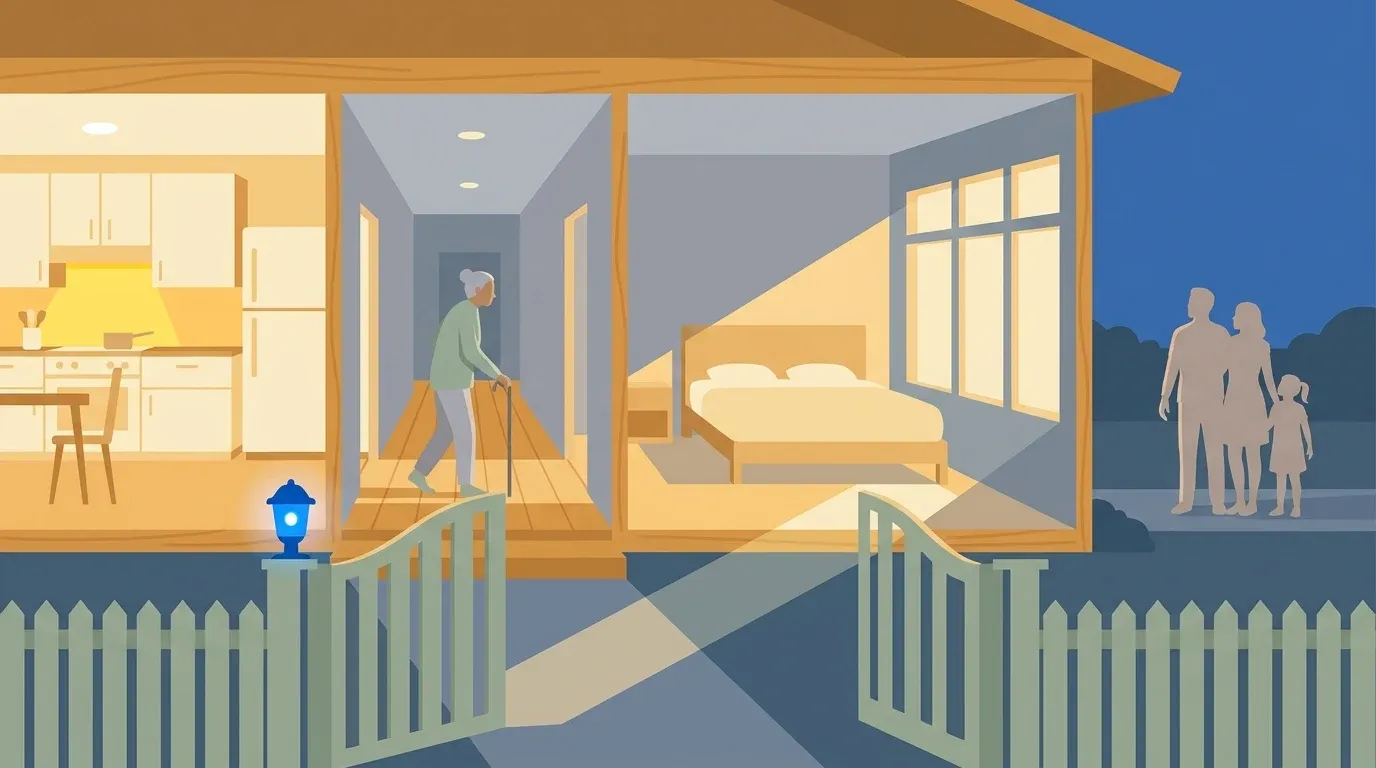
Whether your elderly parent should still live alone depends on falls risk, medication management, cognitive changes, and the support available at home, not on age by itself. Families asking should elderly parent live alone are usually reacting to a specific worry, a missed pill, a stumble, a strange phone call, rather than a single clean answer. This guide breaks the question into the factors that actually predict safety, so you can make a decision you trust instead of guessing.
Should elderly parent live alone: the direct answer
A parent can likely keep living alone if they manage medications correctly, move around safely, recognize emergencies, and have someone checking in regularly. If any of those breaks down and there is no plan to cover the gap, living alone becomes riskier than it needs to be.
That answer is intentionally not about age. Two 82-year-olds can be in very different situations: one walking daily and cooking full meals, the other struggling with balance and forgetting whether they took their morning medication. The question families should actually be asking is not how old is too old, but which specific risks are present right now, and what stands between those risks and a bad outcome.
Why families default to worry instead of a plan
Most adult children do not start with a framework. They start with a feeling: a missed call, a bruise a parent can't explain, a pile of unopened mail. That feeling is valid, but it is not a plan, and it often leads to two bad outcomes. Either the family overreacts and pushes a move that the parent resists and resents, or the family underreacts and hopes things stay stable until a crisis forces the decision anyway.
A better approach starts with what your parent actually wants. The 2024 AARP Home and Community Preferences Survey found that 75% of adults age 50 and older want to remain in their homes and 73% want to remain in their communities. That preference is strong and worth taking seriously, but it is not the only input. The goal is to support that preference safely for as long as it makes sense, and to recognize honestly when it no longer does.
The risk factors that actually matter
Four categories tend to determine whether living alone is safe: mobility and falls, medication management, cognitive function, and home environment.
Falls are the biggest physical risk. The National Institute on Aging reports that more than one in four people age 65 and older fall each year, and falls can lead to hospitalization, long-term disability, or death. Risk factors include muscle loss, balance and gait problems, low blood pressure on standing, and hazards in the home itself, loose rugs, poor lighting, stairs without rails. A parent who has already fallen once, even a minor stumble, is at meaningfully higher risk of falling again.
Medication management is the second major factor. Missed doses, doubled doses, or mixed-up prescriptions cause real harm and are easy to miss from a distance. Cognitive changes, memory lapses, confusion, trouble following a routine, often show up first as small inconsistencies rather than dramatic events. And home environment matters more than people expect: stairs, bathroom safety, lighting, and access to the outside world all shape whether independence stays safe.
The National Institute on Aging recommends planning for these risks before extensive care is needed, and reassessing home safety as needs change, rather than waiting for a crisis to force the conversation.
What a safe setup for living alone actually requires
Living alone safely is not a single decision, it is a system with several working parts. That system typically includes a physically safe home, a way to reach help quickly, reliable medication management, regular human contact, and a family or care team that knows what normal looks like so they can spot when something changes.
Home modifications close a lot of the gap. The same AARP survey found that 43% expect to modify their homes, including 72% who anticipate bathroom changes and 71% who anticipate access changes, like grab bars, no-step entries, or wider doorways. These are practical, often modest changes that meaningfully reduce fall risk.
Regular contact is where many families struggle most, not because they don't care, but because coordinating it consistently across siblings, schedules, and time zones is hard. This is where a structured daily check-in earns its place in the plan. VIPCall makes a daily phone call to your parent, no app required on their end, and turns that call into a caregiver update the family can actually use: what came up, what changed, what needs attention. It does not replace medical care or emergency response, but it closes the gap between visits, giving families a consistent, dependable signal instead of relying on memory and guilt to trigger a check-in. For a structured version of this, see how to build a daily check-in plan for an aging parent and pair it with an emergency plan for a parent living alone so everyone knows what happens if something goes wrong.
When a check-in system is not enough
Be honest about the limits here. A daily call, from VIPCall or anyone else, is a communication tool. It is not a medical device, a fall detector, or a substitute for hands-on care. If your parent has moderate to severe cognitive decline, needs help with daily activities like bathing or dressing, has had a recent serious fall or hospitalization, or lives with a condition that requires frequent clinical monitoring, a phone check-in alone will not keep them safe.
In those situations, the right move is to involve a licensed professional: your parent's physician, a discharge planner, a geriatric care manager, or a home health agency, to assess needs directly. Medicare does provide some support here. Medicare covers eligible part-time or intermittent skilled nursing and therapy services ordered by a provider and delivered through a Medicare-certified agency, but it does not pay for 24-hour home care, meal delivery, or custodial personal care when that is the only need. Understanding that boundary matters, because families sometimes assume Medicare will cover more than it does, and discover the gap during a crisis instead of before one. If you ever suspect a medical emergency, call 911 or your local emergency service immediately rather than waiting on a check-in call.
Building the decision with the whole family
One of the most common breakdowns is not a safety failure, it is a communication failure between siblings. One adult child visits weekly and sees a slow decline. Another talks on the phone monthly and hears a cheerful voice. Both are working from real but incomplete information, and disagreements about what to do next often come from that gap rather than a real difference in values.
A shared, consistent source of information helps close that gap. Knowing how often to check on an elderly parent and having a documented pattern of what is normal versus what has changed gives the whole family the same starting point for a hard conversation, instead of each person defending their own impression.
What to do next
Start by naming the specific risks present in your parent's situation right now: falls history, medication accuracy, cognitive changes, and home hazards. Talk with your parent about what they want, and be honest with them about what you are seeing. Make home modifications where they matter most. Put a daily contact routine in place so no one is relying on memory alone, and build an emergency plan everyone understands before you need it.
See how VIPCall works for the people who matter most at vipcall.ai, and use it as one part of a plan that keeps your parent connected, supported, and safely independent for as long as that makes sense.