
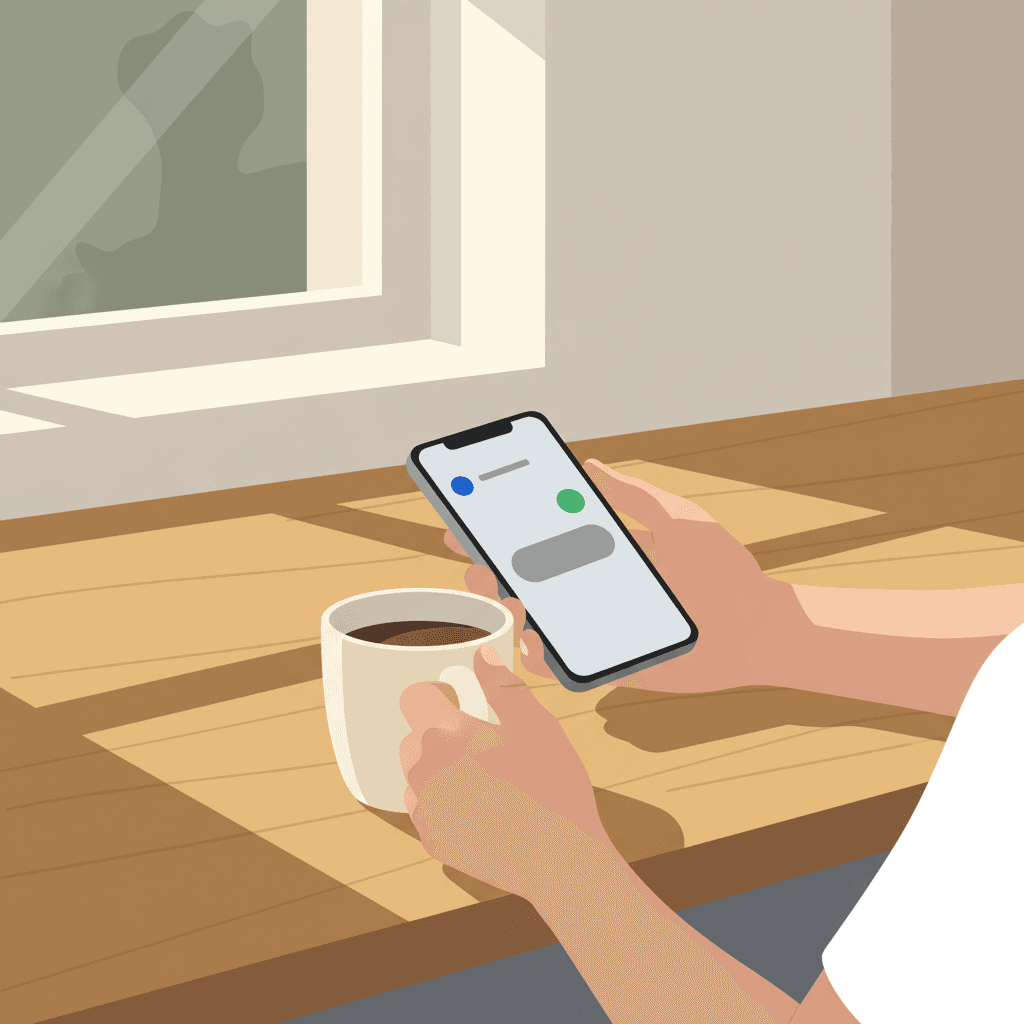
How to Monitor Your Elderly Parent Living Alone (Without Surveillance)
Your parent lives alone. You live an hour away. Or three hours away. Or across the country.
Every day you wonder: *Are they okay?*
You want to know they're safe. You don't want to invade their privacy or make them feel watched.
The question isn't whether to monitor—it's how to monitor in a way that respects their dignity while giving you peace of mind.
See how VIPCall supports care teams and family communication
Why "Just Call More Often" Doesn't Work
The obvious answer is: call them every day yourself.
And maybe you should. Maybe you can. But realistically:
You're not getting honest answers.
When you call, your parent knows you're checking on them. So they perform. They say they're fine even when they're not. They don't want to worry you.
The conversation becomes a status check instead of real connection.
Your schedule doesn't always align.
You work. You have kids. You're in meetings. Some days you can't call. Some days you forget. Some days they don't answer because they're napping or they didn't hear the phone.
Consistency falls apart.
It changes the relationship.
When every call is a wellness interrogation ("Did you eat today? Did you take your pills? Are you feeling okay?"), the parent-child dynamic shifts.
You become the monitor. They become the patient. The relationship suffers.
The Difference Between Monitoring and Surveillance
Here's the line that matters: accountability vs. surveillance.
Surveillance = Watching Without Consent
- Hidden cameras
- GPS tracking without their knowledge
- Reading their texts or emails
- Checking their browser history
- Monitoring their movements through technology they don't know about
This is invasive. It's disrespectful. It treats them like a child or a suspect.
Even if your intentions are good, surveillance damages trust and dignity.
Accountability = Information Sharing With Consent
- Daily wellness calls they know about and agree to
- Medical alert systems they choose to wear
- Trusted contacts who receive summaries with their permission
- Regular check-ins they expect and participate in
- Technology that supports them, not spies on them
This is collaborative. It's respectful. It treats them like an adult who needs support, not control.
The difference: they're part of the system, not the subject of it.
What Effective Monitoring Actually Looks Like
When families say "I need to monitor my parent," what they really mean is: "I need to know if something is wrong."
Here's how to get that information ethically.
Daily Wellness Calls (Automated, Consistent, Transparent)
This is monitoring that respects autonomy.
How it works:
- AI voice agent calls at the same time every day
- Asks pre-set questions (customizable by you)
- Your parent knows it's AI, knows it's happening, consented to it
- Conversation lasts 1-3 minutes
- Summary sent to you and other trusted contacts
What you learn:
- They answered the phone (they're conscious and mobile enough to get to it)
- How they're feeling that day
- What they did, what they plan to do
- Any concerns they mention (pain, confusion, loneliness)
- Medication compliance (if you include that question)
- Patterns over time (energy levels, mood, cognitive clarity)
Why it works:
- Non-intrusive (3 minutes a day)
- Predictable (same time, same format)
- Transparent (they know exactly what's happening)
- Creates daily touchpoint without burdening you
See how VIPCall supports care teams and family communication
The Trusted Contacts Network
Monitoring shouldn't fall on one person.
Set up a circle:
- You
- Siblings
- Close neighbors
- Home health aide (if they have one)
- Their best friend
Everyone gets the same daily summary. Everyone sees the same data.
Why this matters:
If the summary shows "Mentioned feeling dizzy yesterday," maybe you can't drop everything and drive over. But maybe your brother who lives 10 minutes away can stop by.
The network distributes responsibility and creates redundancy. If you miss something, someone else catches it.
Weekly In-Person Check-Ins (With Purpose)
If you can visit weekly or have someone visit weekly, make it intentional.
What to look for:
- How does the house look? (Clean? Cluttered? Unsafe?)
- What's in the refrigerator? (Fresh food? Expired food? Empty?)
- How are they dressed? (Clean clothes? Same clothes as last week?)
- How are they moving? (Steady? Unsteady? New bruises?)
- What's their mood? (Engaged? Withdrawn? Anxious?)
But don't make the visit feel like an inspection. Have a real conversation. Do an activity together. Be their child, not their auditor.
The wellness calls handle the daily monitoring. The weekly visit is for connection and environmental observation.
Medical Alert Systems (For Falls)
If your parent has fallen before or has significant mobility issues, a medical alert button is non-negotiable.
Important: Let them choose the system. If they refuse to wear the pendant because it makes them feel old, respect that and try a different approach (smartwatch-style, wall-mounted button, etc.).
The goal is safety, not forced compliance.
What Daily Wellness Summaries Reveal (That You'd Miss Otherwise)
Families are shocked by what the daily summaries show them.
Pattern Recognition
What you'd miss with weekly calls:
- Monday: Fine
- Tuesday: Forgot pills
- Wednesday: Fine
- Thursday: Felt dizzy
- Friday: Forgot pills again
- Saturday: Fine (this is when you call - "How are you?" "I'm fine!")
- Sunday: Confused about day of week
With daily summaries, you see: Memory issues emerging. Medication non-compliance. Possible neurological symptom (dizziness). Cognitive confusion.
One incident a week seems like nothing. Four incidents a week is a pattern that needs intervention.
Emotional Changes Over Time
Loneliness doesn't show up in a single phone call. It shows up in weeks of data.
Pattern over 14 days:
- "Nothing to report today"
- "Didn't do much"
- "Just watched TV"
- "Nobody to talk to"
- "Same as yesterday"
Every single day. For two weeks.
That's not just "quiet personality." That's isolation affecting wellbeing.
Cognitive Decline Baseline
When you call sporadically, you don't have a baseline. Is Mom more confused today, or is it the same as last week?
Daily data creates the baseline. You can see if cognitive clarity is stable, fluctuating, or declining.
This matters for medical conversations: Instead of telling the doctor "She seems confused sometimes," you can say "The daily check-ins show confusion 3-4 days per week for the past month, mostly in the evenings."
Data helps doctors diagnose.
The Questions to Ask Daily (Customizable Per Parent)
Not every parent needs the same questions. Customize based on their specific situation.
Standard Wellness Questions
- How are you feeling today?
- What did you do today?
- Did you take your medications?
- How did you sleep last night?
- Do you have any pain or discomfort?
- What are your plans for today/tomorrow?
For Specific Concerns
If they're isolated:
- Did you talk to anyone today?
- Do you have any plans to see people this week?
If they have mobility issues:
- Did you get outside today?
- Any trouble walking or moving around?
If they have chronic pain:
- How is your [knee/back/hip] today?
- Are you able to manage the pain okay?
If they have memory issues:
- What day is today?
- Do you remember what you had for lunch?
If they're on complex medications:
- Did you take your morning pills?
- Did you take your evening pills?
The beauty of customization: You're getting the specific information you need for their specific situation.
What to Do When the Summary Says "Needs Attention"
The point of monitoring isn't just information—it's action.
Amber Alerts (Needs Attention)
This means something in the call triggered concern. Could be:
- Mentioned pain
- Forgot medication
- Sounded confused
- Mentioned dizziness or falling
- Expressed feeling very down or anxious
Your response: 1. Read the summary (what exactly did they say?) 2. Call them yourself (follow up on the concern) 3. Coordinate with other trusted contacts (does someone need to visit?) 4. Document (is this a one-time thing or a pattern?)
Not every "Needs Attention" is an emergency. But every one deserves follow-up.
Red Alerts (Missed Call)
If your parent doesn't answer the wellness call, you get notified immediately.
This could mean:
- They're out (grocery store, doctor, walk)
- They're napping
- They didn't hear the phone
- Something is wrong
Your response: 1. Try calling them yourself 2. If no answer, call a neighbor or nearby family member to check 3. If still no contact within a reasonable time, consider wellness check
Most missed calls are innocent. But you want to know quickly.
The Ethical Framework
Monitor in ways that:
- ✅ They consent to
- ✅ They understand fully
- ✅ Respect their autonomy
- ✅ Support without controlling
- ✅ Create safety without invasion
Don't monitor in ways that:
- ❌ They don't know about
- ❌ Make them feel spied on
- ❌ Remove their privacy entirely
- ❌ Treat them like children
- ❌ Prioritize your convenience over their dignity
The test: Would you accept this level of monitoring if someone were doing it to you?
If the answer is no, reconsider your approach.
The Peace of Knowing vs. The Anxiety of Not Knowing
Families tell us the hardest part of having a parent live alone isn't the actual caregiving—it's the not knowing.
Without monitoring:
- Constant low-level anxiety
- Wondering if they're okay
- Guilt about not calling enough
- Fear that something happened and you don't know
- Making decisions based on guesswork
With daily wellness monitoring:
- Morning text: you know they're okay (or you know they need follow-up)
- Data over time: you see patterns forming
- Coordination: siblings/family see the same information
- Early intervention: you catch problems before crisis
- Mental bandwidth: you can focus on your own life without constant worry
The monitoring doesn't fix aging. But it transforms anxiety into information.
See how VIPCall supports care teams and family communication